In most of Build With A Plan's 7 service states, you do not need to add a parking space for a backyard ADU. California, Washington, Colorado, Arizona, and Oregon all have statewide laws that waive or sharply limit ADU parking requirements, at least under specific conditions like transit proximity. Texas and Florida have no statewide ADU law at all, which means parking rules there depend entirely on the city or county you are in. If you have been holding off on an ADU because you assumed it meant losing your driveway, the law probably changed since you last checked.
This comes up constantly in feasibility calls, more than almost any other zoning objection short of setbacks. Here is the actual answer, state by state, plus the one scenario, a garage conversion, where the parking question gets more complicated than a simple yes or no.
ADU Parking Requirements: At a Glance
5 of 7
BWAP states with a statewide ADU parking waiver
0.25-0.5 mi
Typical transit-distance trigger for a full waiver
1 Space Max
California's cap when parking is still required
10 Business Days
To get permit-ready plans started
Why the Parking Question Matters So Much
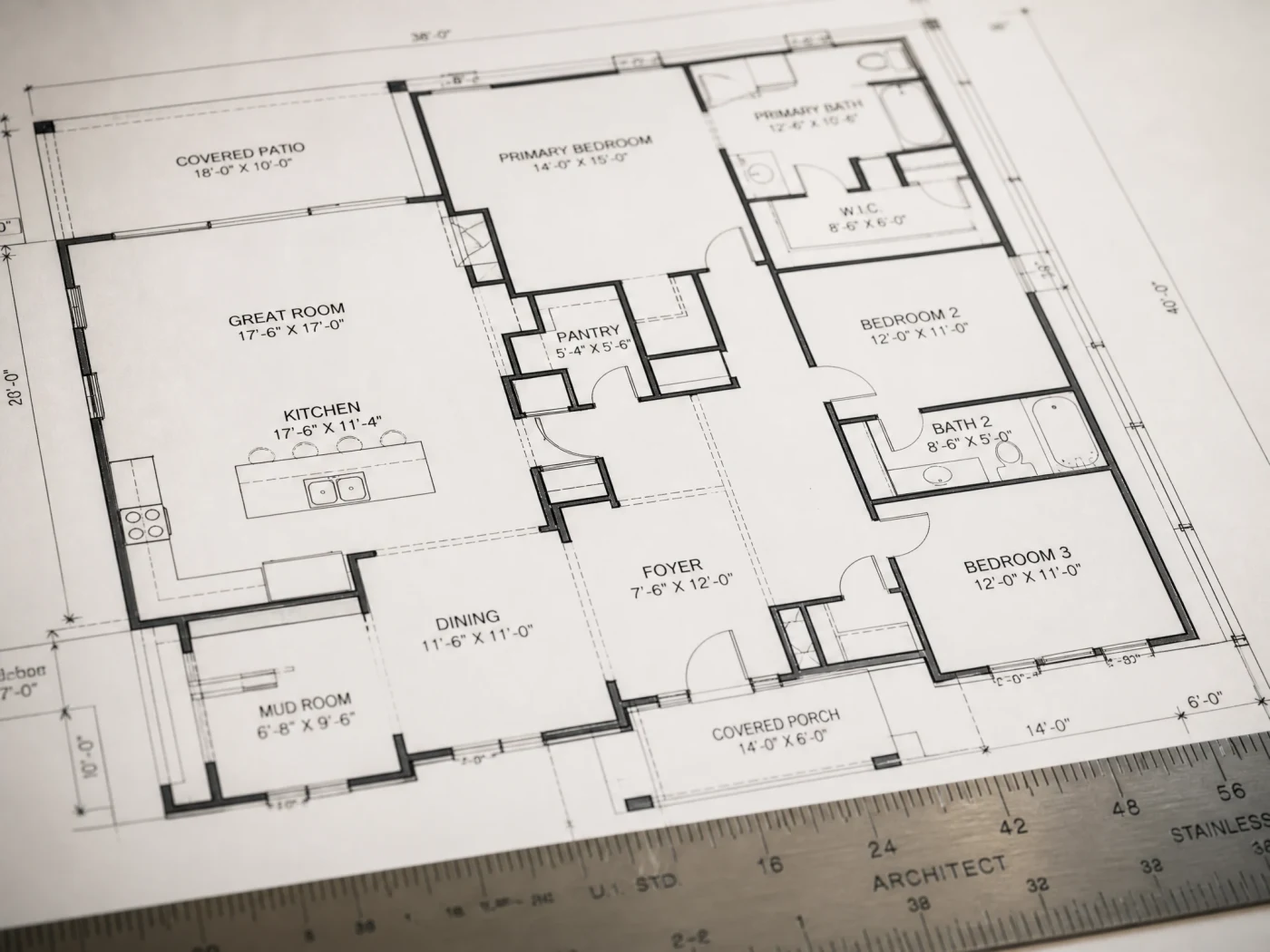
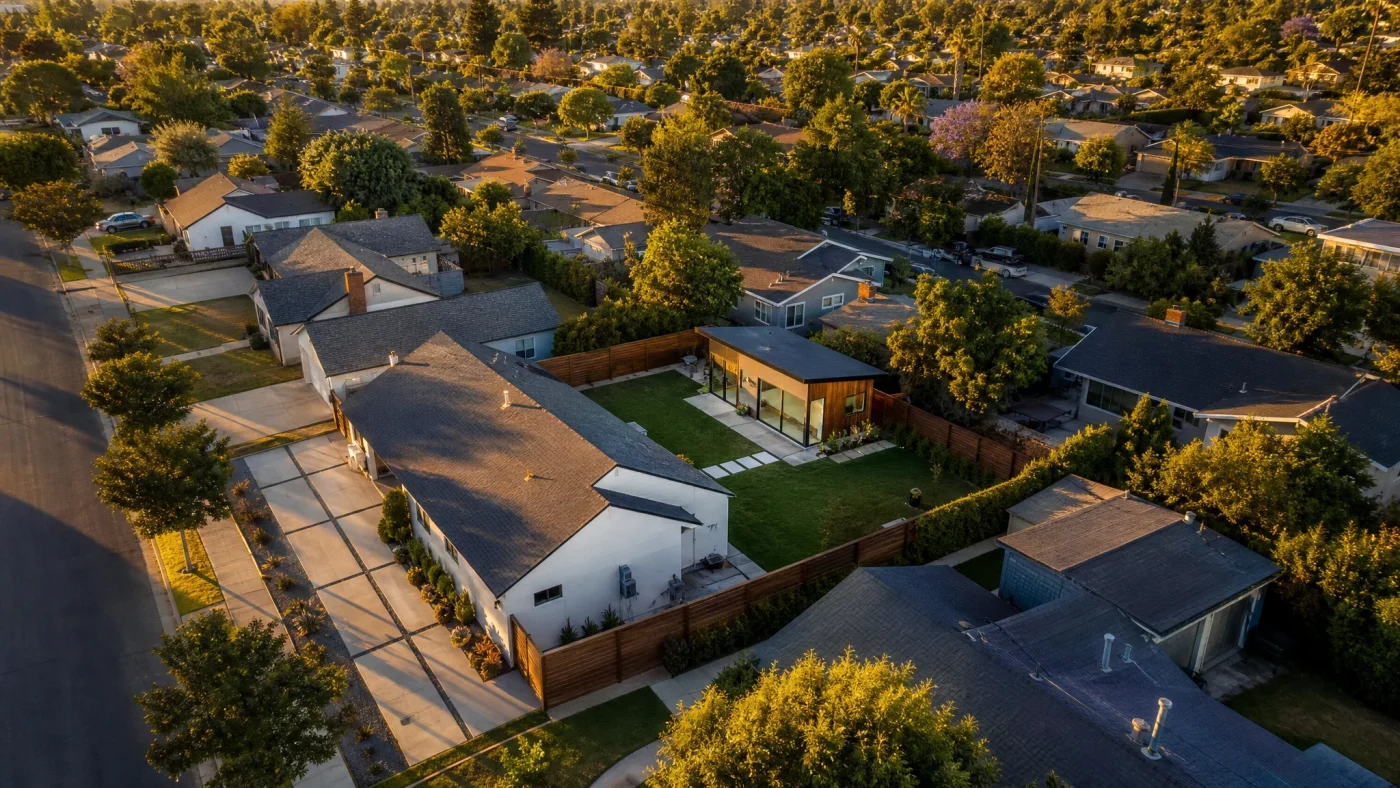
An accessory dwelling unit already competes for space with the main house, the yard, and whatever your city's setback rules leave buildable in between. Adding a mandatory parking pad on top of that can eat the last usable corner of a lot, sometimes enough to shrink a unit from a real one-bedroom down to a studio, or kill the project outright on a narrow lot. Nobody dreams of a backyard home that is mostly a concrete rectangle for a sedan nobody has bought yet. It is a fair thing to worry about.
It is also, for most homeowners in most of our 7 states, no longer the obstacle it used to be. Between 2019 and 2024, five separate state legislatures passed laws specifically targeting ADU parking mandates, on the theory that a rule designed for a four-bedroom house does not make sense applied to a 600-square-foot backyard unit. Zoning code has not fully caught up everywhere, so the honest answer still comes down to your exact address more than the state you live in. Still, the direction of travel is consistent: less required parking, not more.
ADU Parking Requirements by State
Here is what each of Build With A Plan's 7 states actually requires, as of 2026. Treat the transit-distance and population thresholds as the real trigger, not the state name alone; two lots ten minutes apart in the same city can land on opposite sides of these rules.
| State | Governing Law | Parking Rule |
|---|---|---|
| California | State ADU law (Gov. Code, formerly AB 68/AB 2299/SB 1069) | No parking required within 1/2 mile of transit, in a historic district, for interior/garage conversions, when on-street permits are unavailable, near a car-share vehicle, or when filed with a new home permit. Where required elsewhere: capped at 1 space, tandem allowed. |
| Washington | HB 1337 (2023) | No off-street parking may be required within 1/4 mile of a major transit stop, per the official House Bill Report. Seattle has gone further and dropped ADU parking mandates citywide. |
| Colorado | HB24-1152 (effective June 30, 2025) | No additional parking required in most cases. A jurisdiction can still require it only if the lot currently has zero off-street parking, the zone already required parking for the main house as of January 1, 2024, and on-street parking is barred on that block. |
| Arizona | HB 2720 (signed May 2024) | Cities over 75,000 population cannot require additional parking for an ADU or charge a fee in place of it. Smaller cities are not bound by this state minimum and may still require it. |
| Oregon | HB 2001 (effective January 1, 2020) | Cities cannot impose off-street parking mandates on ADUs within an urban growth boundary. Rural properties outside a growth boundary fall under separate state rules with different conditions. |
| Texas | No statewide ADU law | Set entirely by city ordinance. Fort Worth, for example, generally requires about one additional off-street space; other Texas cities vary. |
| Florida | No statewide ADU law (SB 184 in 2025 and SB 48 in 2026 both failed to pass) | Set entirely by county or city ordinance, ranging from none to one space per bedroom depending on jurisdiction. |
Five states, one clear pattern: transit proximity is doing most of the work. If your lot sits within a quarter to half mile of a bus route or rail stop, the odds are good that parking is already off the table as a design constraint, whether or not anyone has told you that yet.
The Garage Conversion Exception
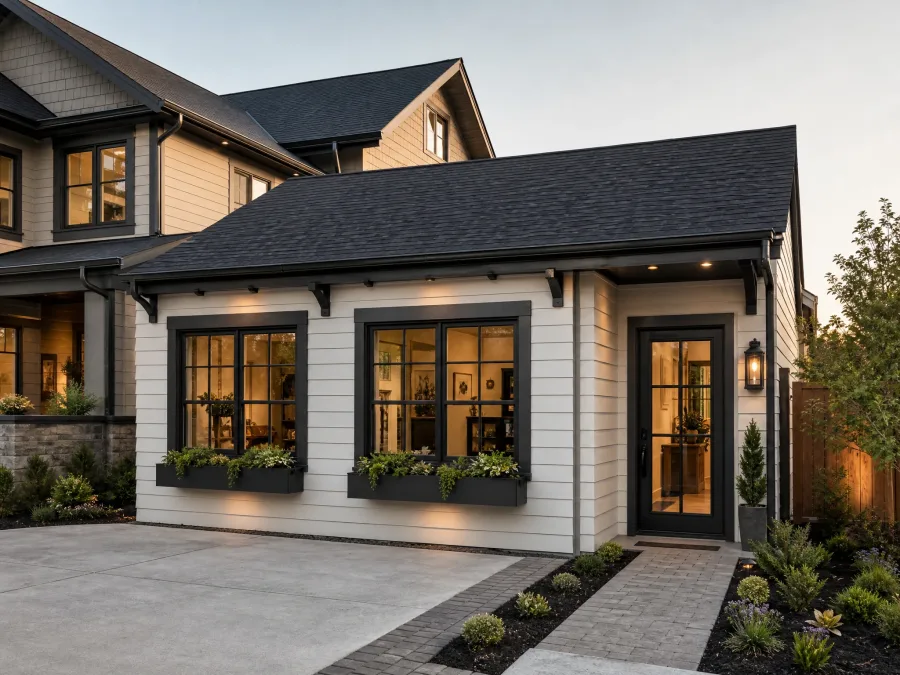
Here is the wrinkle competitor content usually skips: a garage conversion does not always play by the same rule as a new detached ADU, because a garage conversion removes parking that already existed for the main house, a separate question from whatever the new unit itself might need.
California explicitly folds garage and interior conversions into its parking waiver list. The state made a specific policy choice that you do not have to replace the main house's garage parking just because you turned that garage into a legal ADU. Colorado went the other direction. Denver's ADU rules confirm the ADU itself needs no parking, but if your project converts a garage that held the primary home's required parking, you have to replace that parking somewhere else on the lot. Same starting question, two states, two different answers, which is exactly why "does my state require ADU parking" is not quite specific enough a question if a garage conversion is the plan.
When You Still Need to Show Parking
Even in a waiver state, a handful of situations put parking back on the table. Read your city's current ordinance rather than assuming the statewide default automatically applies to your specific lot, since local codes take time to catch up to new state law and sometimes lag by a year or more.
- Your lot is outside any transit-distance threshold. A lot 1.2 miles from the nearest bus stop in California does not qualify for the transit waiver and may still need a space.
- You are in a smaller city in a population-gated state. Arizona's HB 2720 waiver only binds cities over 75,000 residents; a town of 40,000 can still require parking.
- Your city has not updated its code yet. A local ordinance that has not been revised to match a newer state law is still, technically, sitting on the books until someone challenges it or the city updates it.
- You are in Texas or Florida. With no statewide law, the requirement is whatever your specific city or county ordinance says, full stop.
- A garage conversion removes parking a state or city still requires you to replace for the primary home, as in Colorado.
Given all of that, do not treat this article as a substitute for your own site plan. It is the map, not the deed.
Find Out If Your Lot Needs a Parking Space
We check your specific address against your city's current parking, setback, and size rules, and tell you honestly what your lot supports. Free, and you pay nothing if your property does not qualify.
Check My Property: It's Free →How to Get Started
- Run a free feasibility check. We confirm whether your specific lot triggers a parking requirement under your city's current code before you design around a rule that may not even apply to you.
- Get permit-ready plans. Starting at $997 for self-serve packages, or $6,000 for a fully custom-drawn set with a project coordinator managing your city's permit submission, delivered in 10 business days and backed by a 14-day money-back guarantee.
- Get matched with a vetted builder once your plans, parking question settled, are ready for construction.
Most homeowners who ask about ADU parking are really asking a bigger question: will this project actually fit on my lot. Parking is one line item in that math, and for a growing majority of BWAP's service area, it is a line item that has already been crossed off by state law. Worth confirming before you spend a weekend rearranging a floor plan around a driveway you never needed to give up.
Frequently Asked Questions
Do I need a parking space for an ADU?
In most cases, across 5 of Build With A Plan's 7 states (California, Washington, Colorado, Arizona, and Oregon), no, at least under specific conditions like transit proximity, population thresholds, or conversion type. Texas and Florida have no statewide ADU law, so the answer there depends entirely on your local city or county ordinance.
How close to transit do I need to be to skip ADU parking?
It varies by state. California waives parking within 1/2 mile of public transit. Washington's HB 1337 sets the threshold at 1/4 mile of a major transit stop. Both distances are measured from the property, not the ADU structure itself.
Does converting my garage into an ADU mean I have to replace the parking?
It depends on your state. California specifically exempts garage and interior conversions from its parking waiver conditions, meaning you generally do not have to replace that parking. Colorado takes the opposite approach in cities like Denver: the ADU itself needs no parking, but you do have to replace the primary home's original required parking elsewhere on the lot.
What happens if my city still requires ADU parking under state law?
California caps required parking at one space when it does apply, and allows tandem parking on an existing driveway to satisfy it, rather than requiring a dedicated new pad. Other states without an explicit cap leave the specific configuration to local code.
Is ADU parking required in Texas or Florida?
There is no statewide answer for either state, since neither has a statewide ADU law. It comes down to the specific city or county ordinance where your property sits; some require a full additional space per bedroom, others require none.
Related Services