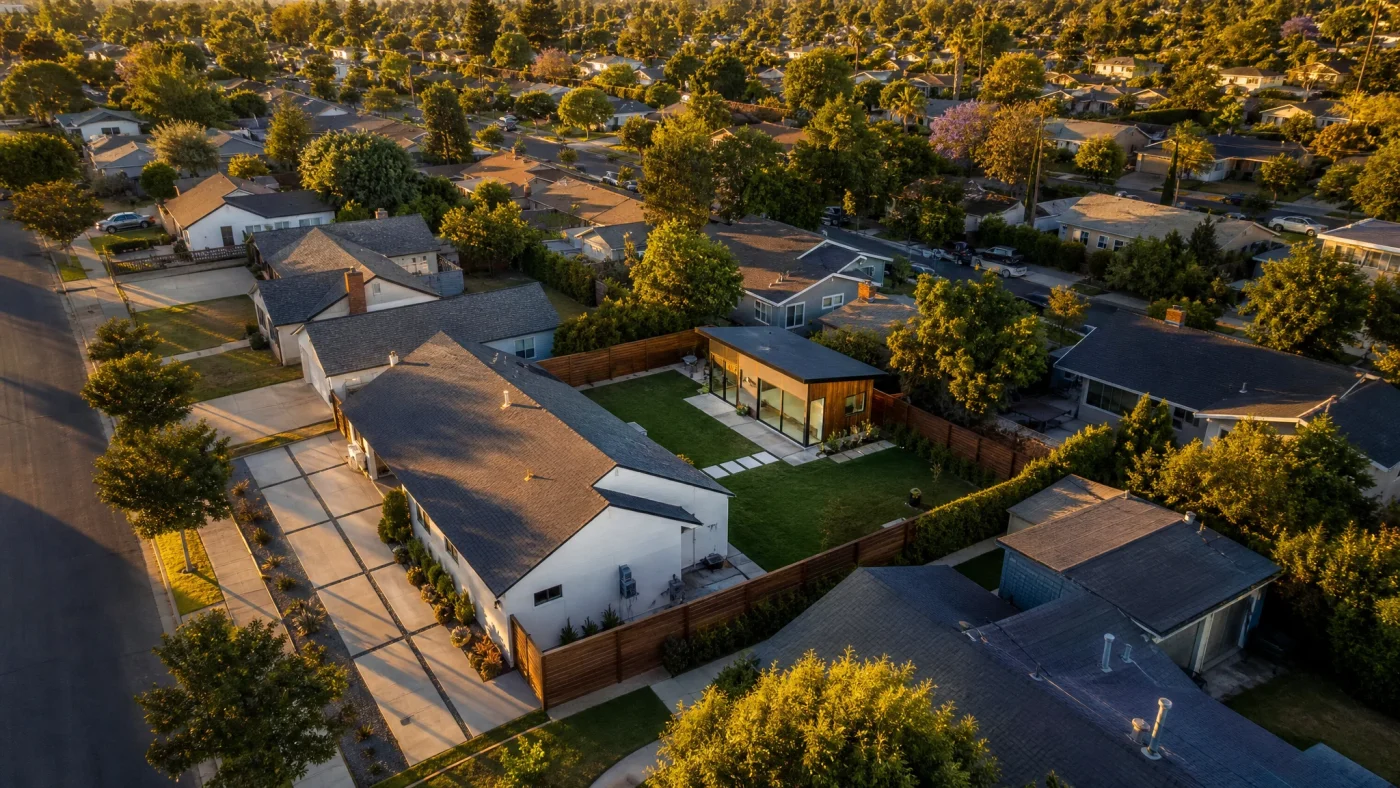
Quick Answer: How Much Rental Income Does an ADU Make?
Across the major US markets we serve, a permitted detached Accessory Dwelling Unit generates between $1,100 and $2,100 per month for a studio or 1-bedroom unit, and between $1,650 and $3,350 per month for a 2-bedroom unit. After accounting for property taxes, insurance, maintenance, and a standard 5% vacancy reserve, an ADU delivers an unlevered cash-on-cash cap rate of 8.5% to 11.5%, significantly outperforming traditional single-family rental properties because the homeowner pays zero land acquisition cost.
In This Guide
- 2026 ADU Rental Income Benchmarks Across 10 US Metros
- The Complete ADU Cash-Flow Model: Revenue vs. Real Expenses
- Studio vs. 1-Bedroom vs. 2-Bedroom: Which Size Delivers the Highest Yield?
- Using ADU Rental Income to Qualify for a Mortgage (Fannie Mae & FHA)
- Tax Advantages: Writing Off Construction with 27.5-Year Depreciation
- Frequently Asked Questions
1. 2026 ADU Rental Income Benchmarks Across 10 US Metros
The primary reason accessory dwelling units deliver superior financial returns compared to traditional real estate investing is that you already own the land. When you purchase a turnkey rental property, 30% to 50% of your acquisition price pays for the land underneath the building. With an ADU, 100% of your capital goes into vertical construction, high-efficiency appliances, and durable finishes.
The table below compiles verified 2026 median rental figures for detached backyard units from our ADU database across 10 major metros:
| Metro Area | Median Studio ADU Rent | Median 1-Bedroom ADU Rent | Median 2-Bedroom ADU Rent | Typical Turnkey Build Cost (650 Sq Ft) | Estimated Gross Cap Rate |
|---|---|---|---|---|---|
| Los Angeles, CA | $1,750 / mo | $2,185 / mo | $2,850 / mo | $215,000 | 11.2% |
| San Diego, CA | $1,850 / mo | $2,320 / mo | $3,050 / mo | $220,000 | 11.6% |
| San Jose, CA | $2,100 / mo | $2,580 / mo | $3,350 / mo | $245,000 | 11.6% |
| Seattle, WA | $1,463 / mo | $2,015 / mo | $2,804 / mo | $225,000 | 9.8% |
| Bellevue, WA | $2,060 / mo | $2,664 / mo | $3,295 / mo | $255,000 | 11.5% |
| Austin, TX | $1,616 / mo | $1,555 / mo | $2,025 / mo | $145,000 | 11.8% |
| Houston, TX | $1,391 / mo | $1,143 / mo | $1,465 / mo | $130,000 | 9.6% |
| Denver, CO | $1,385 / mo | $1,650 / mo | $2,250 / mo | $175,000 | 10.3% |
| Orlando, FL | $1,400 / mo | $1,490 / mo | $1,728 / mo | $120,000 | 13.9% |
| Phoenix, AZ | $995 / mo | $1,239 / mo | $1,549 / mo | $135,000 | 10.1% |
2. The Complete ADU Cash-Flow Model: Revenue vs. Real Expenses
Gross rental income does not equal net cash flow. To accurately evaluate your return on investment, you must model four operational expense categories:
- Property Taxes (The Incremental Addition): Adding an ADU does not cause your primary home to be reassessed in states like California (Proposition 13) or Florida (Save Our Homes). Only the new construction cost of the ADU is added to the tax assessment roll. On a $180,000 build with an average 1.1% effective property tax rate, expect approximately $1,980 per year ($165/month) in additional property taxes.
- Landlord Hazard & Liability Insurance: Endorsing your existing homeowners insurance policy with an ADU rider or detached structure coverage typically costs $350 to $700 per year ($30 to $60/month).
- Vacancy and Credit Loss: In high-demand metropolitan markets, long-term residential vacancies remain low. Underwriters model a conservative 5% vacancy allowance (roughly 18 days of vacancy per year between tenants).
- Maintenance and Repair Reserve: Setting aside 5% of gross rent ($75 to $120/month) covers HVAC filter replacements, plumbing maintenance, appliance wear, and paint refreshes between tenant turnovers.
5-Year Cash-Flow Pro Forma (1-Bedroom Detached ADU in Austin, TX)
- Turnkey Construction Cost: $155,000 (all-in design, permits, and vertical construction)
- Monthly Rental Income: $1,600 / month ($19,200 annually)
- Less Vacancy (5%): -$960 / year
- Less Incremental Property Taxes (1.8%): -$2,790 / year
- Less Insurance Rider: -$450 / year
- Less Maintenance Reserve (5%): -$960 / year
- Net Operating Income (NOI): $14,040 per year
- Unlevered Cash-on-Cash Return: 9.05%
If financed through a Home Equity Line of Credit (HELOC) or fixed-rate second mortgage at 7.5% interest over 20 years (monthly payment of roughly $1,250), the unit still generates $350+ per month in net positive cash flow while your tenant pays off the entire principal balance of the loan.
3. Studio vs. 1-Bedroom vs. 2-Bedroom: Which Size Delivers the Highest Yield?
Homeowners often debate whether to build a compact studio or expand to a 2-bedroom footprint. Compare the structural economics below:
- The 400 Sq Ft Studio: Has the lowest total upfront cost ($85,000 to $135,000), but yields slightly lower rent ($1,000 to $1,750/mo). Best for single traveling healthcare workers, university graduate students, or hosting visiting family members.
- The 600 Sq Ft One-Bedroom (The Cash-Flow Sweet Spot): Costs only 15% more to build than a studio because the kitchen and bathroom plumbing are identical, yet commands 25% to 35% higher monthly rent from long-term single professionals and working couples. Tenants stay significantly longer in 1-bedroom units than studios, dramatically lowering turnover costs.
- The 800 Sq Ft Two-Bedroom: Commands top-dollar rent ($1,850 to $3,350/mo) and appeals to small families, roommates, or remote workers who need a dedicated home office. In California, keeping the structure under 800 square feet secures full protection under state by-right exemption rules.
4. Using ADU Rental Income to Qualify for a Mortgage (Fannie Mae & FHA)
One of the most consequential mortgage policy shifts in recent years occurred when Fannie Mae, Freddie Mac, and the Federal Housing Administration (FHA) updated their underwriting guidelines to allow lenders to count ADU rental income toward mortgage qualification.
How Lenders Calculate ADU Rental Income:
- Existing ADUs (75% Rule): If you are refinancing or purchasing a home that already has a permitted ADU, lenders can use 75% of the gross monthly market rent (as determined by a certified appraiser on Fannie Mae Form 1004D / Freddie Mac Form 71) to offset your debt-to-income (DTI) ratio. The 25% haircut accounts for hypothetical vacancy and maintenance.
- Underwriting Example: If your ADU appraises for $2,000 per month in market rent, the lender adds $1,500 per month in qualifying income to your loan application. This additional borrowing capacity often allows homeowners to qualify for an extra $150,000 to $220,000 in mortgage debt.
- Construction & Renovation Loans: Under FHA 203(k) and Fannie Mae HomeStyle renovation loan programs, borrowers can qualify based on projected future ADU rents once construction plans and permits are submitted.
5. Tax Advantages: Writing Off Construction with 27.5-Year Depreciation
An Accessory Dwelling Unit rented to a third-party tenant qualifies as a residential rental property under IRS guidelines, opening several powerful tax shelters:
- 27.5-Year Straight-Line Depreciation: You can depreciate the total construction cost of the ADU (excluding land value, which is zero) over 27.5 years. On a $180,000 build, that creates an annual paper deduction of $6,545 every single year. This deduction directly offsets your taxable rental income, allowing thousands of dollars in rental profits to reach your pocket tax-free.
- Operating Expense Deductions: All incremental property taxes, insurance premiums, maintenance repairs, cleaning, accounting fees, and mortgage interest associated with the ADU are 100% tax-deductible on IRS Schedule E.
- Cost Segregation: For high-income earners, an accelerated cost segregation study allows you to write off personal property components (appliances, custom millwork, decorative lighting, and specialized HVAC equipment) over 5 or 7 years rather than 27.5 years, generating massive upfront tax savings.
How the Backyard Wealth Package Maximizes Your ROI
Maximizing your net cash flow begins with controlling your upfront soft costs. Traditional architectural firms charge $12,000 to $20,000 just to produce drawings before you even apply for permits. Build With A Plan delivers the complete pre-construction phase through The Backyard Wealth Package:
"We turn your backyard into a rental unit. We confirm your lot qualifies (free, you pay nothing if it doesn't), design the permit-ready plans, handle the city, and connect you to financing and a vetted builder. $6,000 flat, about what an architect charges just to start."
Every project includes our written deliverables commitment:
"Your construction documents will be permit-ready and accepted for submission by your city, or we revise them free until they are. And if your property doesn't pass our free feasibility check, you pay nothing."
We won't even take your money unless your property qualifies. Learn more about how it works or run the numbers on your property with our free feasibility check.
Calculate Your ADU Rental Yield
See What Your Backyard Can Earn Each Month
Enter your property address to see exact 2026 local rental rates, construction cost estimates, and payback timelines for your specific lot. We won't even take your money unless your property qualifies.
Run Your Free Feasibility Check6. Frequently Asked Questions
Does an ADU rent for more as a long-term lease or a short-term rental?
While short-term rentals (Airbnb/VRBO) can produce higher gross revenue in vacation corridors, many cities (including Los Angeles, Denver, Orlando, and ADU in St. Petersburg) enforce strict primary-residency or 30-day minimum lease restrictions on accessory units. Furthermore, long-term tenants pay their own utilities, have zero hotel occupancy taxes, and do not require weekly cleaning fees or platform commissions, making long-term rentals the most stable and passive investment strategy.
Can I sub-meter utilities so the tenant pays their own power and water?
Yes. Depending on your local utility provider, you can either install dedicated utility meters (common for electrical service panels) or install private digital sub-meters on the water and electrical feeds serving the ADU. This allows you to bill the tenant directly for their exact utility usage each month.
How does an ADU affect the resale value of my property?
Under updated appraisal standards, appraisers evaluate a permitted ADU using the income approach and comparable sales approach. On average, a permitted detached ADU adds between 100% and 135% of its total construction cost to the overall appraised value of the property, creating immediate equity upon completion.
Can I legally evict a tenant from an ADU if they stop paying?
Yes. An ADU tenant is governed by the same state and local landlord-tenant laws as any traditional residential lease. Because the ADU is an independent, permitted dwelling unit, standard lease agreements, security deposit rules, and formal unlawful detainer processes apply.