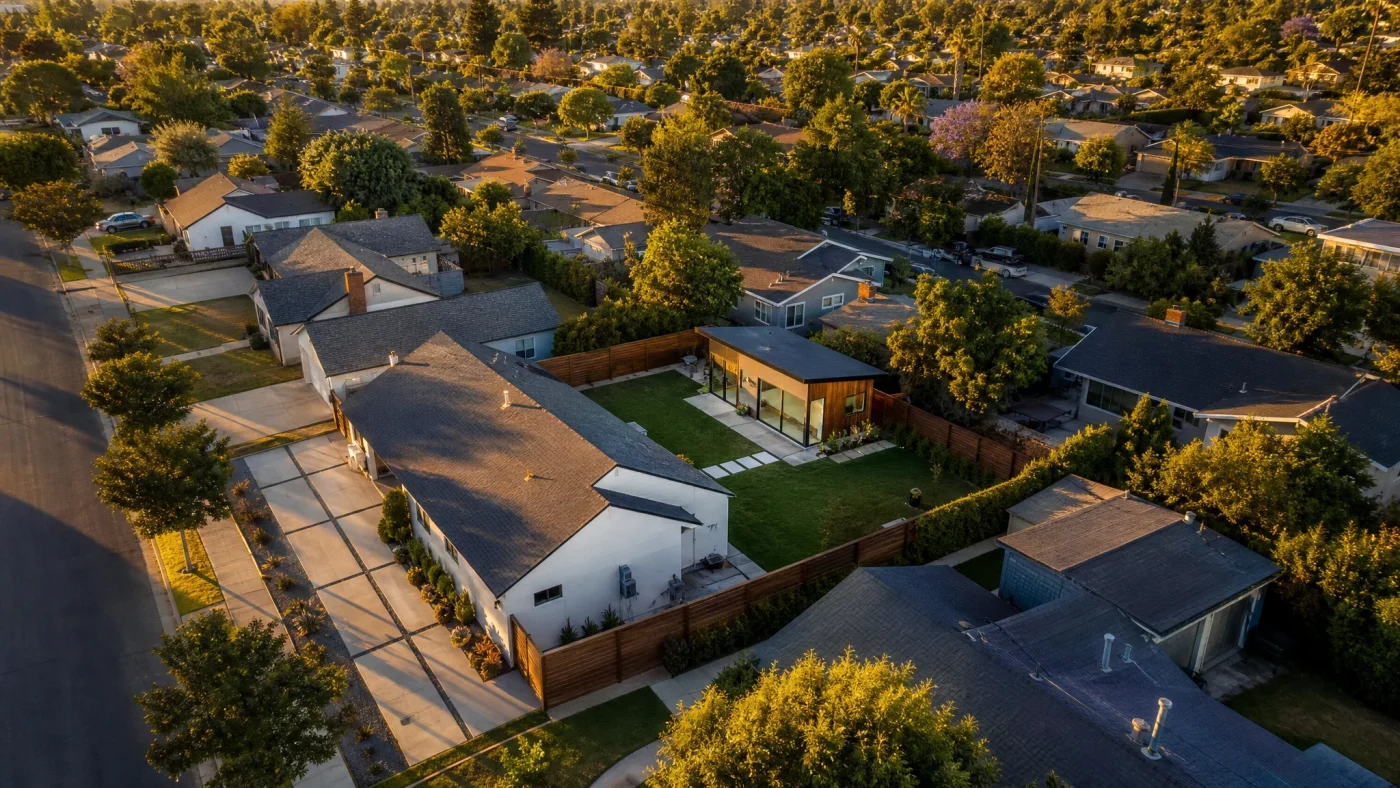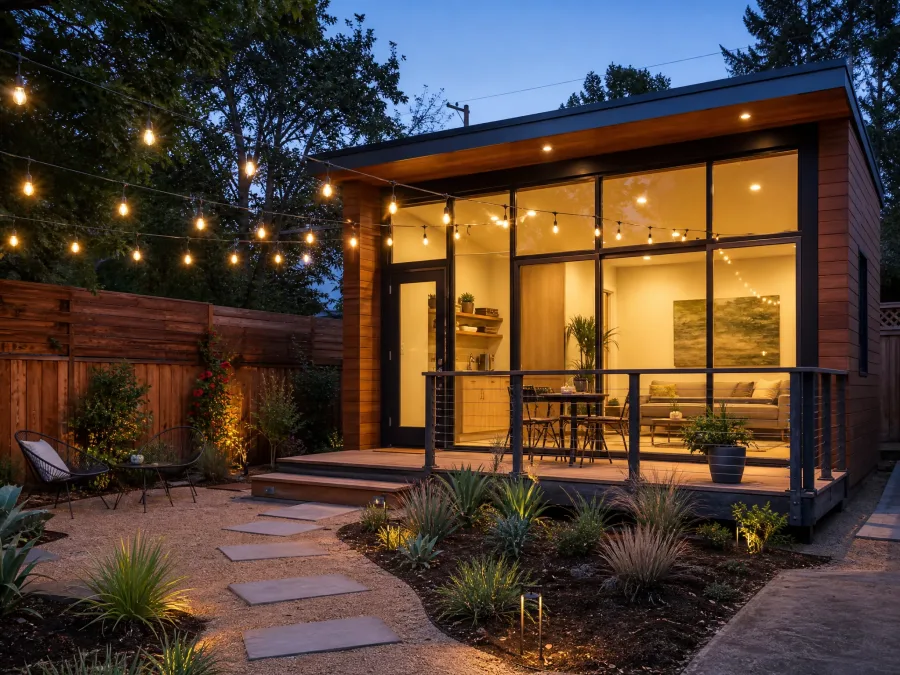
A casita is a small, detached dwelling built on the same property as a primary residence. The word is Spanish for "little house," and it has been in common use across Arizona, New Mexico, Southern California, and Texas for decades longer than the term accessory dwelling unit showed up in a zoning code.
That gap between the everyday word and the legal term is where most confusion starts. If you are researching whether to build one, rent one, or permit one, the word you use matters less than understanding which legal category your structure falls into — because the category determines what you can do with it, who can live there, and whether your city will actually issue a permit.
This guide covers the casita meaning, how it differs from an ADU and a guest house, state-by-state rules in Arizona, Texas, and California, realistic construction costs, and the math that tells you when a casita actually makes financial sense.
What Is a Casita? The Southwest Definition
The term casita has been part of Southwestern American architecture since at least the Spanish colonial period, when haciendas routinely included small outbuildings for guests, extended family, or domestic workers. Modern usage is less formal but recognizable: across Arizona, New Mexico, Nevada, and parts of California and Texas, homeowners use "casita" to mean any small, separate structure on the property — a backyard cottage, a poolside studio, a converted garage, or a detached in-law suite. The size range in casual usage runs from around 300 square feet (a studio with a bathroom and kitchenette) up to 1,200 square feet or more (a full one-bedroom or two-bedroom unit). The architecture often implies a Southwestern or Spanish aesthetic — stucco walls, a tile or flat roof, arched windows — but not always. Many modern casitas are clean-lined contemporary structures that share nothing stylistically with a hacienda except the name. What casita does not imply, at least not reliably, is a specific legal status. That is the part most homeowners miss when they start planning. "Casita" is a description. "ADU" is a legal classification. "Guest house" is a category that falls somewhere between the two, usually with important restrictions attached. The table below shows how these terms map onto one another. The single most consequential variable is the full kitchen. Most jurisdictions use the presence of a permanent cooking facility — a stove or oven with a range, not just a microwave or hotplate — as the line between a guest house (temporary use, often no long-term rental permitted) and an ADU (independent living, long-term rental allowed). If you want the income, you need the stove, and the stove means you are building a legal ADU, not a guest house. In practice: if your casita has a bedroom, full bathroom, living area, and full kitchen, and it is permitted through your city's building department as an independent dwelling, it is a legal ADU regardless of what anyone calls it. If it lacks a kitchen or was permitted only as an "accessory structure," it is not — and renting it long-term could expose you to code enforcement action. Arizona is one of the most casita-friendly states in the country. State legislation (including HB 2720 and related bills) has systematically stripped cities of the ability to prohibit or unreasonably restrict ADUs on single-family lots, bringing Arizona into alignment with California on several key issues. Phoenix allows both attached and detached casitas/ADUs on single-family lots. Key rules as of 2025–2026: Permits are processed through Phoenix's Planning and Development Department (PDD) via the Shape Phoenix portal. Plan-check timelines in our NEON database run approximately 5 weeks for a typical submission, with permit fees ranging $1,800–$7,000 depending on project scope. Scottsdale has become increasingly permissive following state-level mandates, though it has historically maintained design-review requirements in certain districts. Tucson follows similar state-baseline rules: no owner-occupancy requirement, ADUs permitted by right on single-family lots, and a streamlined review process for projects that meet all code requirements. Both cities apply similar setback and height rules to Phoenix with minor variations. State law in Arizona overrides most city restrictions on ADUs, but HOA covenants, conditions, and restrictions (CC&Rs) are private contracts that state law cannot always override. Before breaking ground on a casita in a subdivision with an HOA, read your CC&Rs and, if the language is ambiguous, get a written opinion from the HOA board. An HOA generally cannot prohibit an ADU entirely under current Arizona law, but it can restrict architectural style, exterior materials, and placement in ways that affect your design. Texas has no statewide ADU law. Unlike California and Arizona, which have enacted state preemption to force cities to permit ADUs, Texas leaves the rules almost entirely to local municipalities. This means a casita that is perfectly legal in Austin might require a variance in Dallas or be prohibited in a Houston subdivision with deed restrictions. For Austin and Houston homeowners, a casita is a genuinely viable rental-income strategy. For Dallas and San Antonio owners, owner-occupancy rules limit the model to hosting family, housing a caretaker, or renting one unit while living in the other. Both approaches have real-world value; they are just different financial profiles. Regardless of city, Texas casitas require a standard building permit (the structure must meet International Residential Code requirements for habitable space), and deed restrictions in planned subdivisions must be verified before purchase or construction. California has the most developed state-level ADU framework in the country. Starting with AB 68 in 2020 and continuing through AB 976 (effective January 1, 2024), the state has systematically removed barriers to ADU construction and permanently eliminated owner-occupancy requirements across all jurisdictions. What this means in practice for a homeowner in Los Angeles, San Diego, or Fresno: Coastal cities like Santa Monica, Malibu, and Carmel-by-the-Sea have additional Coastal Development Permit requirements that can slow timelines significantly. Historic districts in Los Angeles, San Diego, and ADU in San Francisco impose design-review requirements. Outside those overlays, most ADU applications in California are processed ministerially — meaning no discretionary hearing, just plan check. Construction cost varies enormously based on state, city, type of build, and finish level. The table below uses verified cost ranges from our compliance database and current market data for the three states where casitas are most commonly built. These ranges assume a standard detached new-construction casita on a flat, accessible lot without unusual site conditions. A few factors can shift your number meaningfully: Free feasibility confirms your lot qualifies before you spend a dollar. If it qualifies, permit-ready casita drawings are 10 business days away. If it doesn’t, you pay nothing. Rental rates for a casita track closely with studio and one-bedroom apartment rates in the same market, often with a modest premium because tenants pay for privacy, no shared walls, and access to private outdoor space. The figures below come from our NEON compliance database, which is updated from verified market data for cities where we actively design and permit ADUs. Source: Build With A Plan NEON compliance database; Houston and San Antonio 1BR ranges from RentCafe/ApartmentAdvisor 2025–2026 market data. Figures reflect median for detached ADU or comparable studio/1BR rental unit in each market. Individual property and neighborhood will vary. Occupancy rates for a well-maintained, correctly-priced casita in these markets typically run 90–96%. A casita that sits vacant for more than a few weeks is almost always a pricing problem, not a demand problem, in these metros. The casita makes financial sense when the monthly rent covers your debt service on the construction cost with enough left over to justify the project risk and management overhead. Here is how to run the basic math. Take your all-in project cost (construction + soft costs). Divide by your expected annual net rent (gross rent minus vacancy, property management if applicable, insurance, and a small maintenance reserve). That gives you a payback period in years. If that number is under 10 years in a market with strong appreciation, the project is worth running the numbers in depth. If it is over 15 years, you need either lower construction costs or higher rents to make it work. A concrete example using Phoenix, AZ (mid-range figures from our database):
Add a 15–30% property value uplift (the range we see across our portfolio, consistent with FHFA research showing ADU-equipped homes appreciating at roughly 22% above comparable non-ADU properties), and the Phoenix casita starts to look like a 7–9 year effective payback when you include equity gain alongside cash flow. The fastest way to know which category your property falls into is a feasibility check — not a general question to Google, but a specific assessment of your parcel against your city's actual zoning code. That is the first thing we do before any design work starts. We check your lot against your city’s actual zoning code and tell you whether you have a GO, a VERIFY, or a NOT-VIABLE before any design money changes hands. If your property doesn’t qualify, you pay nothing. A casita is a small, detached secondary dwelling on the same property as a primary residence. The term comes from the Spanish word for "little house" and is commonly used across Arizona, New Mexico, Southern California, and Texas. It is a colloquial term, not a legal one — the formal zoning classification for the same structure is usually "accessory dwelling unit" or ADU. They often describe the same structure, but "ADU" is a legal zoning term and "casita" is not. A casita that includes a full kitchen, bathroom, and sleeping area and is permitted through the local building department as a secondary dwelling unit is legally an ADU. A casita built only as an accessory structure — without a full kitchen or a permit allowing independent occupancy — is typically classified as a guest house and may not be legally rented long-term. Construction costs range from about $150–$300 per square foot in Arizona and Texas, and $240–$500+ per square foot in California. A 600–800 square foot detached casita typically costs $100,000–$200,000 in Phoenix or Austin and $150,000–$400,000 in Los Angeles or San Diego. Add 10–20% for soft costs: design drawings, permit fees, engineering, and utility connections. Yes. Any habitable structure requires a building permit, including casitas. Building without a permit creates serious problems at resale, refinancing, and insurance underwriting, and some jurisdictions require unpermitted structures to be demolished or brought into compliance before a sale can close. Permit requirements, fees, and plan-check timelines vary significantly by city.
Get your permit-ready drawings in 10 business days. 14-day money-back guarantee.
Casita vs. ADU vs. Guest House: The Legal Difference
Term
What It Means
Can You Legally Rent It?
Full Kitchen Required?
Legal zoning classification. A complete second home on the same lot as a primary residence.
Yes — long-term rental is generally permitted where ADUs are allowed.
Yes — full cooking facility (stove/oven) is typically required to qualify.
Regional informal term for a small backyard dwelling. Common in the Southwest. Not a legal category.
Depends entirely on how it is permitted — if it is permitted as an ADU, yes.
Depends on intended use and local code.
A secondary structure intended for temporary or occasional use. Often lacks a full kitchen.
Often restricted or prohibited for long-term rental — check local ordinance.
Usually no — presence of a full kitchen is often what legally upgrades it to an ADU.
Arizona Casita Rules
Phoenix
Scottsdale and Tucson
The HOA Caveat
Texas Casita Rules
City
Owner-Occupancy Required?
Key Notes
No
Most permissive large city in TX. ADUs allowed by-right in SF-1, SF-2, SF-3 zones under the HOME initiative. Max ~1,100 sq ft.
No citywide requirement
No zoning code (Houston is unique). Must check for private deed restrictions — these can prohibit ADUs even where city code is silent.
Yes
Either the primary home or the ADU must be owner-occupied. Limits effective casita investment strategy.
Yes
Owner must file an affidavit acknowledging owner-occupancy. Cannot rent out both the primary house and the casita simultaneously.
California Casita Rules
How Much Does a Casita Cost to Build?
State / City
Build Cost Per Sq Ft
Typical Total (600–800 sq ft)
Plans + Permits
$200–$300
$120,000–$240,000
$1,800–$7,000 permit; $997–$2,997 drawings
$182–$255
$109,000–$204,000
$2,000–$8,000 permit; $997–$2,997 drawings
$155–$230
$93,000–$184,000
Permit cost varies by project value
$240–$490
$144,000–$392,000
$3,500–$12,000 permit; $997–$2,997 drawings
$300–$500
$180,000–$400,000
$3,500–$12,000 permit; $997–$2,997 drawings
Market
Median Studio ADU Rent
Median 1BR ADU Rent
Median 2BR ADU Rent
$925/mo
$1,400/mo
$1,580/mo
$1,140/mo
$1,800/mo
$1,920/mo
$960/mo
$1,400/mo
~$1,350/mo
$840/mo
$1,200/mo
~$1,200/mo
$1,600/mo
$2,100/mo
$2,860/mo
$1,875/mo
$1,950/mo
$2,950/mo
$1,030/mo
$1,200/mo
$1,508/mo
When Does a Casita Make Financial Sense?
The Breakeven Calculation
When a Casita Makes Sense
When a Casita Does Not Make Sense
What is a casita?
Is a casita the same as an ADU?
How much does it cost to build a casita?
Do I need a permit to build a casita?
Stop Researching. Start Building.