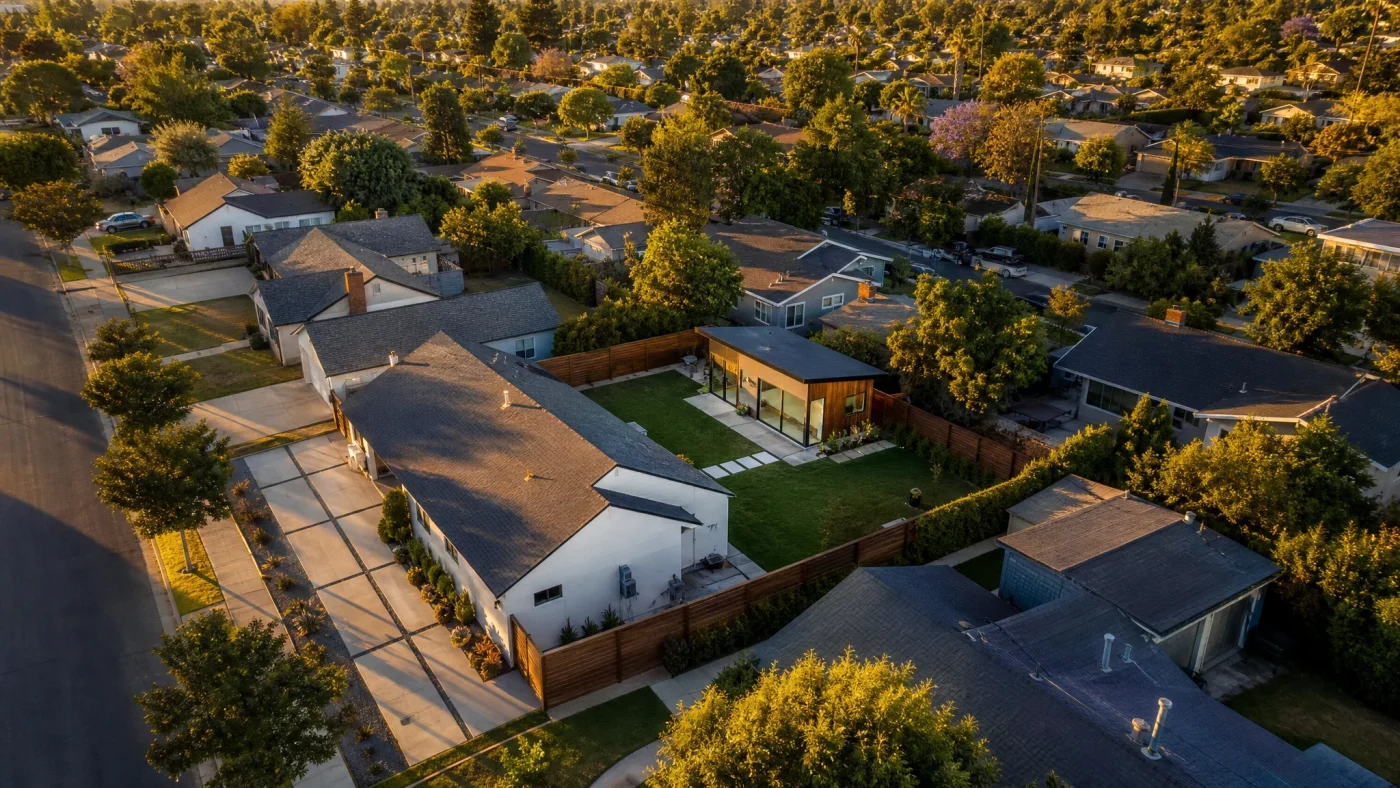
An ADU appraisal values your accessory dwelling unit the same way an appraiser values the rest of your house: comparable sales, replacement cost, and, more and more, the rent the unit can generate. A permitted ADU typically adds an estimated 20% to 35% to a property's value. An unpermitted one can lose all of that value in a single afternoon, because an appraiser is not allowed to count square footage nobody signed off on.
That gap, between a permitted unit that pads your equity and an unpermitted one that appraises for nothing, is where most homeowner confusion about ADU appraisals actually lives. Below is how the appraisal itself works, what moves the number up or down, and why the permit is doing more financial work than most homeowners realize.
ADU Appraisal At a Glance
20%-35%
Est. value added by a permitted ADU
$45K-$90K
Est. appraised-value risk, unpermitted ADU/garage conversion
30%
Cap on ADU rent counted toward mortgage qualifying income
10 Business Days
To get permit-ready plans started
What an ADU Appraisal Actually Measures
There is no separate "ADU appraisal" you schedule on its own. When you refinance, sell, or take out a home equity line, one appraiser walks the whole property, and the accessory dwelling unit becomes one more component of that single valuation, alongside the roof, the kitchen, and the number of bathrooms in the main house. What makes an ADU different is how much weight it can carry: a well-documented unit can move the number more than almost any other single feature on the lot.
The appraiser's job is part detective work. They confirm the unit exists, confirm it is permitted (this is the part homeowners most often get wrong, more on that below), measure it, and then decide how much of its value to fold into your home's total. Think of it less like a bonus round and more like the appraiser quietly checking your homework before handing back a grade. Show your work (permits, a certificate of occupancy, a clean set of plans) and the grade goes up. Skip it, and the whole unit can get marked as extra credit that does not count.
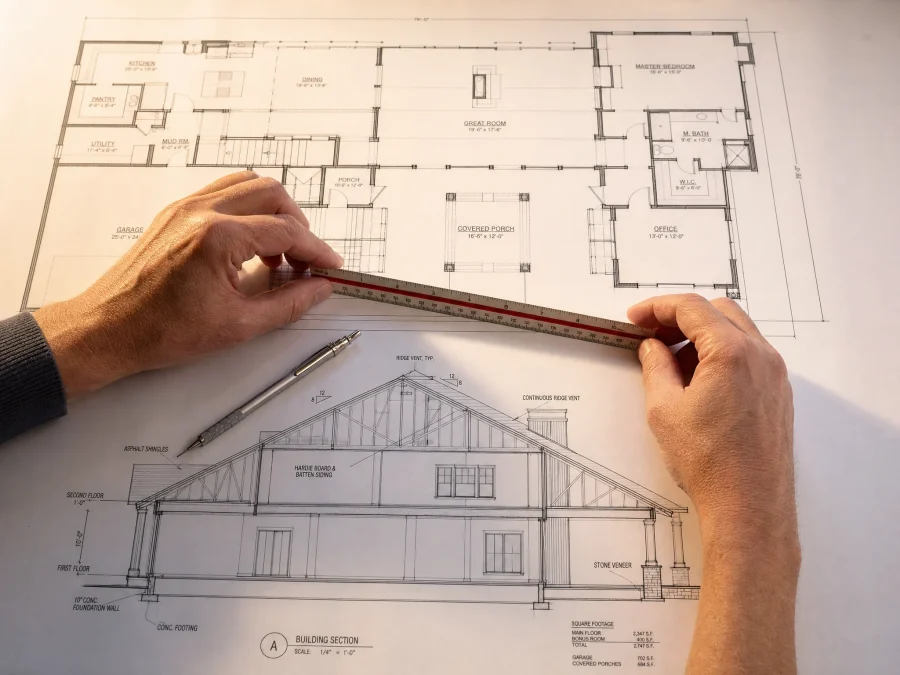
The Three Ways Appraisers Value an ADU
Appraisers lean on three standard approaches, and most ADU appraisals blend at least two of them.
Sales comparison approach. The appraiser looks for three to six recently sold properties, ideally within a mile and sold in the last six to twelve months, that also have an ADU. They adjust for unit type, size, layout, and how separate the unit feels from the main house. This used to be the hard part: true ADU comps were scarce. In the post-legalization building boom of the last few years, most active markets now have enough sold ADU properties for appraisers to work with directly.
Income capitalization approach. This one estimates value based on what the unit can rent for, using a gross rent multiplier (GRM) specific to your area. A 2-bedroom ADU renting for an estimated $4,000 a month works out to $48,000 a year; at a local GRM of 15, that puts the income-based value of the unit alone in the neighborhood of $720,000, though the real number swings hard with local rent levels and the GRM your market actually supports. Appraisers who use this approach lean on our city-by-city ADU rental income data or an equivalent local rent survey, not a national average.
Cost approach. This estimates what it would cost to rebuild the unit today, minus depreciation, plus the value of the land it sits on. It is typically the most conservative of the three, since it ignores market demand and simply prices the materials and labor. An appraiser might reference it as a floor, even when the sales comparison or income approach carries more weight in the final number.
None of these three approaches works in isolation on a well-documented ADU. A careful appraiser triangulates between them and leans hardest on whichever one has the best local data behind it.
How Much Value Does a Permitted ADU Add
Permitted ADUs typically add an estimated 20% to 35% to a property's value, a range that shows up consistently across appraisal-industry reporting and holds up against our own breakdown of backyard home equity math. In high-demand markets, a well-finished unit can add an estimated $150,000 to $300,000 or more; our Los Angeles example puts an estimated 30% increase on a $790,000 home at roughly $237,000 in added value, which nets out to an estimated $45,000 to $57,000 in immediate equity once you subtract the unit's construction cost.
That range is wide on purpose. Location, lot size, finish level, and the strength of local ADU comps all move it, sometimes by a lot. Two nearly identical units, one in a neighborhood with five recent ADU sales to compare against and one in a neighborhood with zero, can appraise differently for reasons that have nothing to do with the unit itself. Treat 20% to 35% as a planning range for your budget conversation, not a number your specific appraiser is contractually obligated to hit.
| Factor | Effect on Appraised Value |
|---|---|
| Permit status | Unpermitted space is typically excluded entirely |
| Available ADU comps nearby | More comps, more confidence in the sales comparison figure |
| Local rental rates | Higher rents raise the income-approach figure |
| Separation from main house | A distinct entrance and utilities typically appraise higher than a shared-access layout |
| Finish level | Full kitchen and code-compliant systems appraise higher than a bare-bones build |
Can You Use ADU Rent to Qualify for a Mortgage
Since Fannie Mae's Desktop Underwriter 12.1 update took effect the weekend of March 21, 2026, lenders can count rental income from an ADU toward a borrower's qualifying income on a purchase or limited cash-out refinance of a single-unit primary residence. There is a real ceiling on it, though: ADU rental income used for qualifying cannot exceed 30% of your total qualifying income, and only one ADU's rent counts even if the property has more than one accessory unit.
On the appraisal side, this rule change added a paperwork step, not a shortcut. The appraiser attaches a Single-Family Comparable Rent Schedule (Form 1007) specific to the ADU, separate from the main house, and notes explicitly that the reported market rent applies to the accessory unit. If your neighborhood has few ADU rental comps, the appraiser can use similar non-ADU rentals and adjust from there, the same workaround used in the sales comparison approach above.
One nuance worth knowing before you get to the closing table: appraisers are trained to watch for double counting, since ADU rent can boost both your qualifying income and the property's income-approach value at the same time. That is a lender and appraiser mechanic to be aware of, not something you need to manage yourself. If financing is part of your plan, our guide to ADU financing options covers how these rental-income rules interact with construction loans and cash-out refinances in more detail.
Find Out What Your Lot Actually Supports
We check your address against your city's zoning rules and tell you the size and configuration your property qualifies for, free. You pay nothing if it does not qualify.
Check My Property: It's Free →The Unpermitted ADU Problem
Here is the part of an ADU appraisal that turns a homeowner's stomach the fastest. Under Fannie Mae and Freddie Mac guidelines, appraisers must exclude unpermitted square footage from a property's official gross living area. In practice, that means an unpermitted ADU is not appraised at a discount. It is often appraised at zero, and in some cases the appraiser or lender treats it as a liability rather than a neutral non-factor, since undocumented construction can carry code and safety questions nobody has verified.
The dollar impact is not abstract. Industry estimates put the appraised-value risk on an unpermitted garage conversion or ADU at roughly $45,000 to $90,000, on top of the $4,000 to $12,000 it typically costs to retroactively legalize a unit through a city's permit or amnesty process, where one is available. Compare that to the cost of doing it right the first time, and the unpermitted route stops looking like the shortcut it appears to be at the start of a project.
This is exactly why the permit step matters more than the framing or the finishes. A beautifully built unit with no permit on file appraises the same as a shed with a hot plate in it: not at all. A modest, code-compliant unit with a full permit history appraises as real square footage the day the certificate of occupancy is issued. If you already have an unpermitted structure, most states with active ADU legalization efforts (California's amnesty programs among them) offer some path to retroactive permitting, which is usually cheaper and faster than most homeowners assume once they actually call the city and ask.
How to Get Started
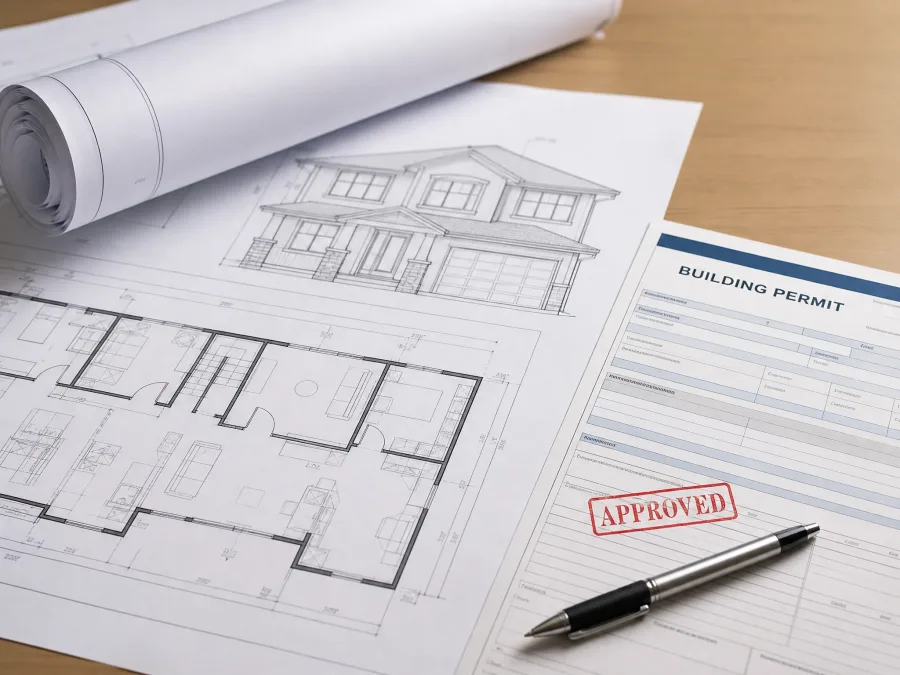
If you are building new, the appraisal outcome above gets decided long before an appraiser ever sets foot on your property, at the permit stage.
- Run a free feasibility check. We confirm your lot qualifies before you spend anything. If it does not qualify, you pay nothing.
- Get permit-ready plans. Starting at $997 for self-serve packages, or $6,000 for a fully custom-drawn set with a project coordinator managing your city's permit submission, delivered in 10 business days and backed by a 14-day money-back guarantee.
- Get matched with a vetted builder once your plans are permit-ready, so the unit you build is the unit that actually appraises for what you expect. For a market-specific look, see ADU design in Los Angeles.
Once your unit is permitted and rented, our city-by-city rental income breakdown and ADU construction cost guide are the natural next reads, one shows what the finished unit can earn, the other shows what it typically costs to get there before an appraiser ever weighs in. Either way, the appraisal itself stops being a mystery and starts being a formality, which is exactly the outcome a permit is supposed to buy you.
Frequently Asked Questions
How is an ADU appraised?
An ADU is appraised as part of the whole property's single appraisal, typically using a blend of the sales comparison approach (recent nearby ADU sales), the income capitalization approach (rental value), and the cost approach (replacement cost minus depreciation). The appraiser also confirms the unit is permitted before assigning it any value.
Does an ADU increase your home's appraised value?
Yes, when it is legally permitted. A permitted ADU typically adds an estimated 20% to 35% to a property's value, though the exact figure depends on your market, lot, and finish level. An unpermitted unit typically adds no appraised value at all.
Can you use ADU rental income to qualify for a mortgage?
Yes, as of Fannie Mae's Desktop Underwriter 12.1 update in March 2026, lenders can count ADU rental income toward a borrower's qualifying income on eligible purchase and refinance loans, capped at 30% of total qualifying income and limited to one ADU per property.
What happens if my ADU is unpermitted?
Under Fannie Mae and Freddie Mac guidelines, appraisers must exclude unpermitted square footage from a property's gross living area, which typically means the unit adds no appraised value and can be treated as a liability rather than an asset. Industry estimates put the resulting appraised-value risk at roughly $45,000 to $90,000 for an unpermitted garage conversion or ADU.
Do appraisers use comparable ADU sales?
Yes, when they can find them. Appraisers typically look for three to six ADU-equipped properties sold within about a mile in the last six to twelve months. Where local ADU comps are scarce, an appraiser may use non-ADU rental comparables and adjust for the difference instead.
Is getting an ADU appraised different from a regular home appraisal?
Not procedurally. One appraiser values the whole property in a single visit. What differs is the added documentation, permit records, a rent schedule specific to the accessory unit (Form 1007), and sometimes ADU-specific comparable sales, that the appraiser needs to fold the unit's value into the total accurately.