ADU financing is the money homeowners borrow to build a backyard home, and it typically comes from one of six sources: a HELOC, a home equity loan, a cash-out refinance, a construction-to-permanent loan, a government-backed renovation loan like an FHA 203(k), or a dedicated ADU loan program. Most homeowners end up choosing based on one number: how much equity they already have versus how much of the project they need to borrow against the home's future value. A change to Fannie Mae's underwriting rules in March 2026 also means, for the first time, projected ADU rental income can count toward qualifying for some of these loans.
None of this is as complicated as it sounds once you see the six options side by side, with real 2026 rates and what each one actually requires. (It is, admittedly, exactly as complicated as a mortgage broker's vocabulary always sounds, but we will get through it together.) That is what this guide does, plus where Build With A Plan fits into the process (a design and permitting company, not a lender) and how to avoid financing a project that turns out your lot cannot legally hold.
ADU Financing: At a Glance
6 Options
Main ways homeowners fund an ADU
~7%-8.5%
Typical HELOC rate, Aug. 2026
30%
Max ADU rental income counted toward qualifying (Fannie Mae, 2026)
10 Business Days
To get permit-ready plans a lender can underwrite against
What ADU Financing Actually Means
ADU financing is simply the loan (or combination of loans) a homeowner uses to cover the cost of designing, permitting, and building an accessory dwelling unit. It is not a separate category of mortgage product invented for backyard homes. Every option below is a standard lending product, a HELOC, a refinance, a renovation loan, that homeowners already use for kitchen remodels and additions, just sized and structured for an ADU's specific cost and timeline.
The reason it gets its own guide instead of a footnote in a general home-improvement-loan article is the size of the number. A typical detached ADU runs $150,000 to $400,000 or more to build, well beyond what most homeowners keep in a savings account. That means the financing decision is not optional the way it might be for a $15,000 bathroom remodel. It is the first real gate a project has to pass through, and it is worth treating it with the same seriousness as picking a contractor.
6 Ways to Pay for an ADU
Six options cover the large majority of how homeowners actually fund a backyard home. Here is what each one is, in plain terms, before the rate table below.
- HELOC (home equity line of credit). A revolving credit line secured against your home's equity. You draw what the project needs, when it needs it, and pay interest only on the balance you have actually used, similar to a credit card with a much lower rate and your house as collateral.
- Home equity loan. The lump-sum sibling of a HELOC. You borrow a fixed amount against your equity, at a fixed rate, and pay it back on a set schedule. Less flexible than a HELOC, more predictable.
- Cash-out refinance. You replace your existing mortgage with a new, larger one and pocket the difference in cash. This resets your entire mortgage, not just the new portion, so it only makes sense in specific rate scenarios covered below.
- Construction-to-permanent loan. A single loan that funds construction in draws as work progresses, then converts automatically into a standard mortgage once the ADU is finished. One closing instead of two separate loans.
- Government-backed renovation loans. The FHA 203(k) and Fannie Mae HomeStyle Renovation loan both let you borrow against the home's value after the ADU is built, not its current as-is value, with lower down payment requirements than a typical construction loan.
- Dedicated ADU loan programs. A smaller category of loans built specifically around ADU projects, some through state or city housing agencies, some through private lenders who underwrite specifically against projected ADU rental income rather than only your existing income.
Cash and personal savings are technically a seventh option, and the cheapest one if you have it. Most homeowners researching ADU financing do not, which is exactly why the other six exist.
Rates and Costs Compared
Rates move every week, so treat the numbers below as a current snapshot, not a quote. What matters more than the exact percentage is the shape of the tradeoff: flexible draw-as-you-go options versus fixed lump sums, and whether you are borrowing against what your home is worth today or what it will be worth once the ADU exists.
| Option | Typical Rate (Aug. 2026) | Structure | Down Payment / Equity Needed |
|---|---|---|---|
| HELOC | ~7%-8.5%, variable | Revolving credit line | Existing home equity, draw as needed |
| Home equity loan | ~8%-10.5%, fixed | Lump sum | Existing home equity |
| Cash-out refinance | ~7%-7.6%, fixed | New, larger first mortgage | Existing equity; resets whole mortgage |
| Construction-to-permanent | Lender-specific, often above standard mortgage rates during the build phase | Draws during construction, converts to a mortgage | Typically 10%-20% down |
| FHA 203(k) | Near standard FHA mortgage rates | Purchase or refinance plus renovation, one loan | As low as 3.5% with 580+ credit |
| Fannie Mae HomeStyle | Near standard conventional rates | Purchase or refinance plus renovation, one loan | As low as 3% with 620+ credit to skip permanent mortgage insurance |
A pattern worth noticing: the two renovation-specific loans (FHA 203(k) and HomeStyle) often carry rates close to a standard mortgage, but they come with more paperwork, a longer approval timeline, and a requirement that the work be tracked through a draw schedule. The equity-based options (HELOC, home equity loan) are faster to close and simpler to manage, but currently carry a rate premium above a first mortgage. There is no universally cheapest option. There is only the one that fits your specific equity position, credit, and timeline.
The 2026 Rule Change That Actually Moves the Needle
Most ADU financing articles list the same six options and stop there. Here is the part that changed this year and matters more than any single rate: as of March 2026, Fannie Mae updated its underwriting rules so that projected rental income from an ADU can count toward a borrower's qualifying income on a purchase or limited cash-out refinance for a one-unit primary residence.
Before this change, a lender evaluating your loan application looked only at your existing income, salary, other rental properties, and so on, when deciding how much you could borrow. The ADU you had not built yet was invisible to the math. Now, a portion of the rent that unit is projected to earn can be added to your qualifying income on eligible loan types, subject to standard documentation requirements. Two caps apply: the rental income counted cannot exceed 30% of your total qualifying income, and if you have no prior landlord history, it is further capped at the property's total housing payment (principal, interest, taxes, insurance, and association dues, if any). Only one ADU's income counts, even on a lot with more than one accessory unit.
This is not a loophole and it does not turn a NOT-VIABLE lot into a bankable one. It changes the math for a homeowner who is close to qualifying for a larger loan and whose ADU would rent for real money in their market, which is exactly why an accurate, city-specific rent estimate (not a national average) matters before you walk into a lender's office. Ask your loan officer directly whether this specific rule applies to your loan type and situation. Not every loan product or scenario qualifies, and lenders are still rolling out their own implementation of the update.

Which Option Fits Your Situation
Four common homeowner situations, and where they tend to land:
- You have significant equity and your current mortgage rate is good. A HELOC or home equity loan usually wins here. You keep your existing low-rate first mortgage untouched and borrow only against the equity above it.
- You have equity, but your current mortgage rate is higher than today's market rate. A cash-out refinance can make sense, since you are replacing a worse rate with a better one while pulling out construction cash in the same transaction. Run the math carefully here. Refinancing resets your entire loan term, not just the new portion.
- You do not have much home equity yet, but the ADU's projected value pushes the numbers. An FHA 203(k) or Fannie Mae HomeStyle loan lets you borrow against the after-construction value of the home rather than what it is worth today, which is the whole point of a renovation loan.
- You are financing new construction from the ground up, on a longer timeline. A construction-to-permanent loan avoids a second closing once the build is done, at the cost of more paperwork and inspections tied to draw schedules.
State and city-level programs are worth checking too, though they come and go with funding cycles. California's CalHFA ADU Grant Program, which reimbursed up to $40,000 in pre-development costs for income-qualified homeowners, exhausted its funding in December 2023 and has not reopened as of this writing; some counties and cities, like San Diego's housing commission ADU finance program, have run their own lower-interest construction loan programs at various points. Always verify directly with the issuing agency before building a specific program into your budget. These programs pause, resume, and change eligibility rules faster than any article can track.
What Lenders Will Ask For
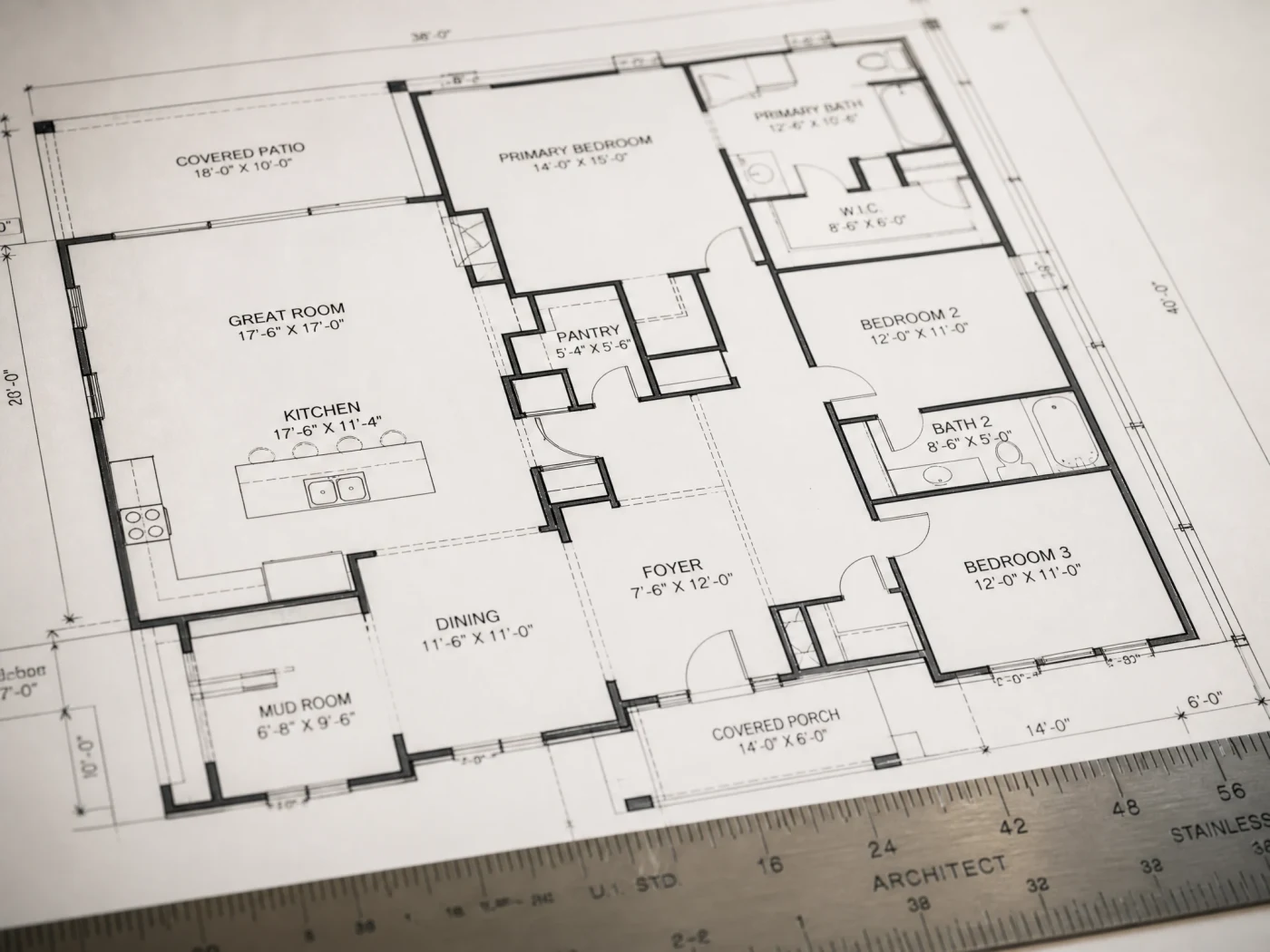
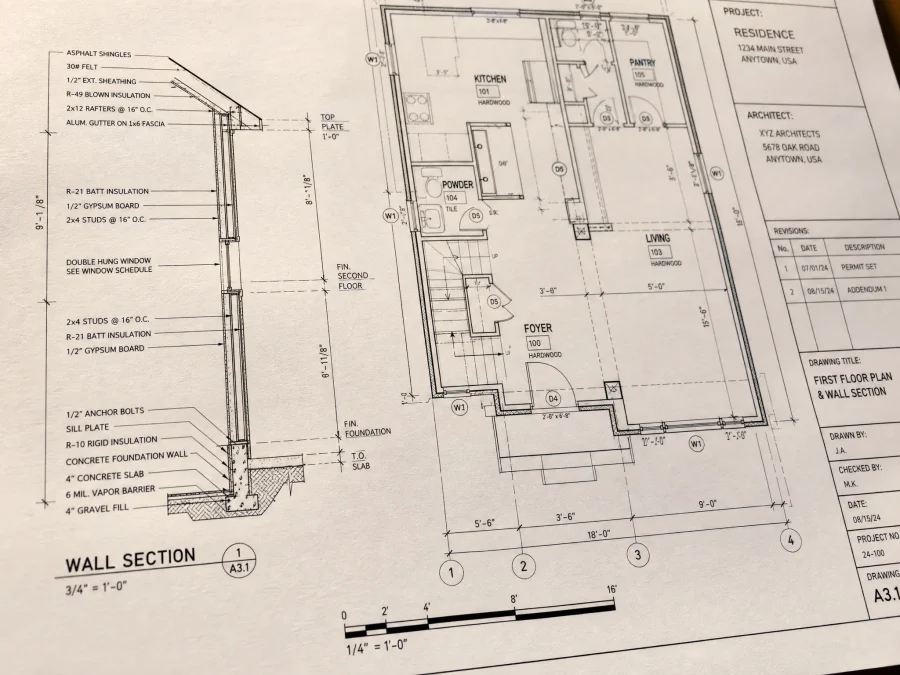
Regardless of which option you pursue, most lenders want to see a similar packet before approving ADU financing: proof of income and existing debt (standard for any mortgage product), a current appraisal or, for renovation loans, an after-improvement appraisal, and increasingly, a set of plans detailed enough to price the project accurately. A rough sketch on a napkin does not underwrite. A permit-ready construction document set, the same one your city needs to approve the build, is also what a lender needs to size the loan correctly and, for rental-income-based qualifying, to support a realistic rent estimate.
Know What You Qualify For Before You Talk to a Lender
We check your address against your city's actual zoning rules and estimate your property's buildable size, rent potential, and value added, free. You pay nothing if your property doesn't qualify.
Check My Property: It's Free →How Build With A Plan Connects You to Financing
Build With A Plan does not originate or underwrite loans. Our ADU design service covers the plans and permit-ready documentation your city and, often, your lender will need, and connects you to a lending partner who specializes in ADU projects. That introduction costs you nothing extra. We do not guarantee financing approval, a specific rate, or a specific loan amount; those decisions belong to the lender, based on your individual credit, income, and the property itself. What we control is making sure you walk into that conversation with an accurate, city-verified estimate of what your property can support, instead of a guess.
Getting the wrong loan structure for your situation is one of the more expensive mistakes in this entire process, sometimes costing five figures over the life of the loan. That is the specific problem the financing connection step exists to reduce, not eliminate. You still choose your lender, and the final loan terms are always between you and them, the same way we would rather you shop your plans to multiple contractors than take our word for it.
How to Get Started
- Run a free feasibility check. Confirm your lot qualifies for an ADU, and get an estimated size, rent, and value added, before you talk to a single lender. If your property does not qualify, you pay nothing.
- Compare your equity position against your income situation. That comparison, more than any single rate, points you toward the equity-based options or the renovation-loan options.
- Get permit-ready plans. Starting at $997 for self-serve packages, or $6,000 for a fully custom-drawn set with a project coordinator managing your city's permit submission, delivered in 10 business days and backed by a 14-day money-back guarantee. Lenders underwrite against real plans, not a general idea of a backyard unit.
- Talk to a lending partner. Bring your feasibility numbers and plans to the conversation. Ask directly whether the 2026 rental-income underwriting update applies to your specific loan type.
- Get matched with a vetted builder once financing and plans are both in place, so your construction bid lines up with what you actually borrowed.
Frequently Asked Questions
What is the best way to finance an ADU?
There is no single best option. A HELOC or home equity loan typically fits homeowners with significant existing equity and a good rate on their current mortgage. A cash-out refinance can make sense if your current mortgage rate is higher than today's market rate. An FHA 203(k) or Fannie Mae HomeStyle loan fits homeowners without much equity yet, since both lend against the home's value after the ADU is built rather than its value today.
Can I use a HELOC to build an ADU?
Yes. A HELOC is one of the most commonly used ADU financing tools because it lets you draw funds as construction progresses and pay interest only on what you have used. As of August 2026, national average HELOC rates run roughly 7% to 8.5%, though your specific rate depends on your credit, loan-to-value ratio, and lender.
Does ADU rental income count toward mortgage qualification?
As of a March 2026 Fannie Mae underwriting update, yes, in some cases. Projected ADU rental income can count toward qualifying income on a purchase or limited cash-out refinance for a one-unit primary residence, capped at 30% of total qualifying income, and further capped at the property's total housing payment if you have no prior landlord history. Confirm directly with your lender whether it applies to your specific loan and situation.
How much does an ADU cost to finance?
The loan amount you need depends on the ADU's construction cost, typically $150,000 to $400,000 or more for a custom detached unit and $50,000 to $150,000 for a garage conversion, plus design and permitting fees. The interest cost on top of that depends heavily on which financing option you choose and current rates at the time you borrow.
Is a cash-out refinance a good option for ADU financing?
It can be, particularly if your current mortgage rate is higher than today's market rate, since a cash-out refinance replaces your entire first mortgage with a new one at the current rate while providing construction cash in the same transaction. It is generally a weaker option if your existing mortgage rate is already low, since refinancing resets that rate across your full loan balance, not just the new portion.
What is a construction loan for an ADU?
A construction-to-permanent loan funds the ADU build in stages (draws) as work is completed, then converts automatically into a standard mortgage once construction finishes, avoiding a second loan closing. It typically requires a down payment in the 10% to 20% range and more documentation than an equity-based loan, since the lender is tracking progress against a build schedule.
Are there grants available for ADU construction?
Some exist at the state or city level, but availability changes often. California's CalHFA ADU Grant Program, which reimbursed up to $40,000 in pre-development costs, exhausted its funding in December 2023 and has not reopened as of this writing. Always verify current status directly with the issuing agency before counting on grant funding in your budget.