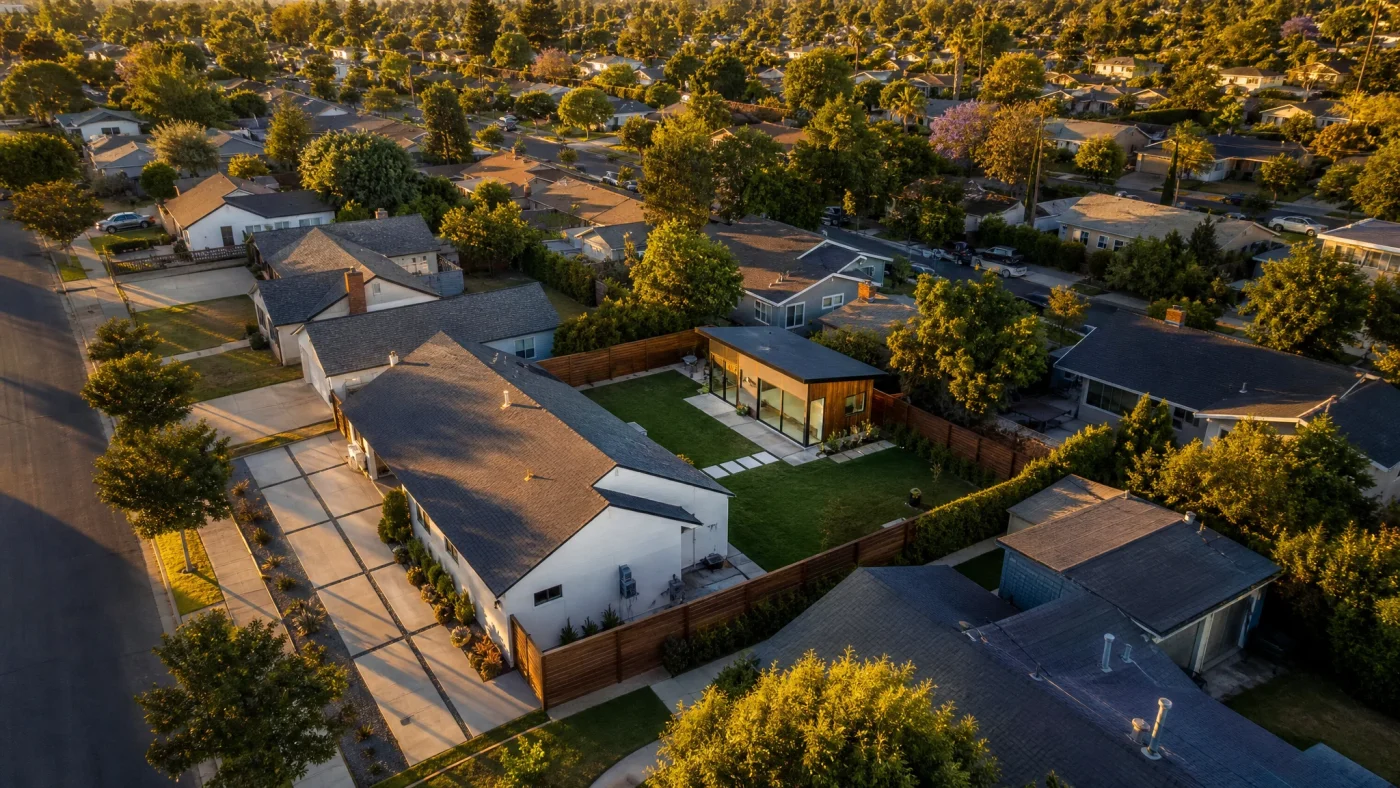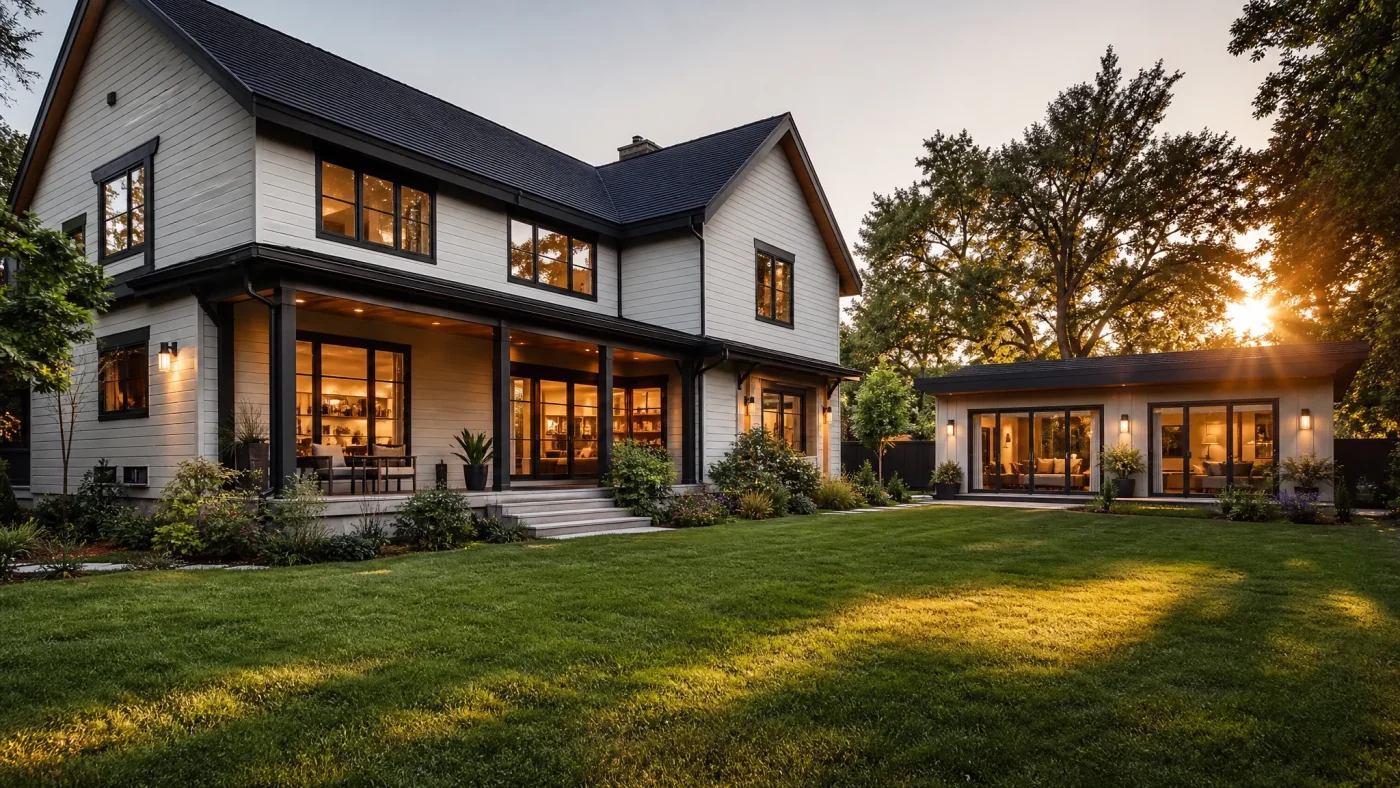
Adding an accessory dwelling unit (ADU) is one of the most powerful real estate investments a single-family homeowner can make. Across the United States, changing demographics, severe housing shortages, and flexible state zoning laws have transformed how buyers and lenders evaluate residential property. What was once viewed as a simple backyard novelty or hobby shed is now recognized as a premier income-producing real estate asset.
When exploring adu real estate, homeowners routinely ask fundamental financial questions: How much will an ADU actually increase my home's market value? Will my property taxes double? How do licensed appraisers evaluate a secondary unit? And will having an ADU make my house easier or harder to sell when it comes time to move?
This guide breaks down the financial, appraisal, tax, and lending realities of owning, developing, and selling an adu property. By understanding how the residential real estate market values accessory units, you can design a space that maximizes immediate rental cash flow while building long-term equity.
What Is an ADU in Real Estate?
In modern property development, an adu in real estate represents a secondary, independent residential dwelling unit located on the same legal parcel of land as a primary single-family home. Legally classified as an accessory dwelling unit, the structure must include complete, independent living facilities: a permanent foundation, dedicated exterior entrance, full kitchen (with permanent cooking facilities, sink, and refrigeration), private bathroom, and designated sleeping area.
In contrast to multi-family properties (such as traditional duplexes or apartment complexes), an ADU cannot typically be sold separately from the primary residence under standard fee-simple deeds, though select jurisdictions like California have recently introduced statutory frameworks under AB 1033 allowing local municipalities to adopt condominium split ordinances.
The Four Primary ADU Real Estate Configurations
- Detached ADU (Backyard Cottage): A standalone secondary structure physically separated from the main home. Detached units command the highest resale valuations, provide superior tenant privacy, and maximize rental yields.
- Attached ADU: An addition built directly onto the exterior wall of the main dwelling, sharing at least one common wall while maintaining a private entrance and independent utility infrastructure.
- Garage Conversion ADU: A converted detached or attached vehicular garage transformed into fully permitted residential living space. Garage conversions deliver the lowest upfront capital expenditure and fastest path to cash flow.
- Junior ADU (JADU): A smaller unit (up to 500 square feet) created entirely within the existing footprint of the primary home, often featuring an efficiency kitchen and shared or private sanitation facilities.
Whether you plan to generate passive monthly rent, accommodate aging parents, or position your house for a high-equity exit, understanding the asset dynamics of an adu property ensures your capital is deployed effectively.
How Appraisers Value an ADU: The Three Appraisal Approaches
One of the greatest points of confusion in adu real estate is property appraisal. Homeowners frequently spend $180,000 to construct a beautiful detached backyard home, only to be surprised when an appraiser assigns an arbitrary or conservative adjustment on a refinancing report.
Appraisers do not guess. Professional licensed appraisers evaluate residential properties using three distinct valuation methodologies established by the Uniform Standards of Professional Appraisal Practice (USPAP). Understanding these approaches helps you position your property for maximum appraisal credit.
| Valuation Methodology | How It Evaluates Your ADU | Real Estate Advantages | Primary Valuation Challenges |
|---|---|---|---|
| Sales Comparison Approach | Compares recent sales of nearby homes with permitted ADUs (paired sales analysis). | Preferred by Fannie Mae and Freddie Mac; reflects actual retail buyer willingness to pay. | Difficult in suburban neighborhoods where few nearby homes have sold with legal ADUs within the past 6 to 12 months. |
| Income Capitalization Approach | Capitalizes the net operating income (NOI) generated by ADU market rents into a lump-sum asset value. | Accurately credits the property for high-yield cash flow; standard for income-producing assets. | Conventional single-family appraisers often resist using full commercial capitalization on 1-unit residential forms. |
| Cost Approach | Estimates the replacement cost of materials, labor, foundation, and permits minus physical depreciation. | Establishes a concrete, verifiable baseline based on actual local construction economics. | Does not account for emotional buyer demand, location premiums, or long-term rent appreciation. |
1. The Sales Comparison Approach (Market Comps)
For standard residential mortgage financing, lenders require appraisers to prioritize the Sales Comparison Approach. Under this method, the appraiser identifies three to six recent closed sales of comparable properties ("comps") within the neighborhood.
If the appraiser finds recent sales of homes that also have legal, permitted detached ADUs, they perform a paired-sales analysis to determine the dollar premium buyers paid for the secondary unit. For example, if a standard 2,000-square-foot home sold for $750,000, and an identical home with a 600-square-foot permitted ADU on the same street sold for $920,000, the indicated contributory value of the ADU is approximately $170,000.
The primary hurdle with this approach is comp scarcity. In neighborhoods where ADU adoption is still emerging, appraisers may struggle to find closed sales with accessory dwellings within a one-mile radius over the preceding six months. When comps are unavailable, inexperienced appraisers may erroneously treat the ADU as basic finished storage or simple non-living accessory square footage.
2. The Income Capitalization Approach (Cash Flow Value)
Because an ADU can generate legitimate, arms-length rental revenue, investors and sophisticated appraisers utilize the Income Approach. This methodology calculates the net operating income (gross annual market rent minus estimated operating expenses, vacancy allowances, and insurance) and applies a market capitalization rate (cap rate) or Gross Rent Multiplier (GRM).
For example, consider a 750-square-foot ADU in an active rental market earning an estimated $2,100 per month ($25,200 annually). Factoring in an 8% operating and reserve allowance ($2,016), the net annual income generated by the ADU is $23,184. In a market where residential rental cap rates hover around 6.5%, the capitalized real estate asset value of that income stream is:
$$\text{Asset Value} = \frac{$23,184}{0.065} = $356,676$$
While standard residential loan forms (such as Fannie Mae Form 1004) focus on sales comps, presenting a formal Income Approach calculation to your appraiser demonstrates undeniable economic utility.
3. The Cost Approach (Replacement Cost)
The Cost Approach establishes what it would cost to recreate the secondary structure from the ground up at current market rates for labor, engineering, framing, utilities, finishes, and municipal permits, minus any physical deterioration.
If constructing an equivalent 800-square-foot detached ADU in your metropolitan area requires $280 per square foot in direct hard and soft costs ($224,000 total), the Cost Approach sets an empirical baseline below which the contributory value should not reasonably fall.
How to Prepare an "Appraisal Package" for Your Home
When refinancing or selling an adu property, never leave the valuation to chance. Prepare an appraisal documentation packet to hand to the appraiser during their physical site inspection:
- Official Building Permits and Certificate of Occupancy: Proof that the ADU is fully permitted, inspected, and legally compliant with municipal building codes.
- Architectural Drawings and Floor Plans: Clean, dimensioned construction documents displaying the precise gross living area, ceiling heights, and utility layout.
- Detailed Construction Cost Ledger: Line-item documentation of what was spent on foundation, framing, plumbing, electrical, HVAC, and architectural finishes.
- Rental History or Market Rent Survey: Evidence of current lease agreements or a schedule of documented market rents for 1-bedroom and 2-bedroom accessory units within a two-mile radius.
- Nearby ADU Comps: A list of recent property sales in your city or county where the listing noted a secondary dwelling unit, granny flat, or carriage house.
How Much Does an ADU Add to Property Value?
Across major real estate markets in the United States, adding a legal, permitted accessory dwelling unit typically increases total property market value by 20% to 35%, depending on the size of the unit, the quality of construction, and local rental demand.
In absolute dollar terms, a quality detached ADU frequently adds between $150,000 and $350,000 in contributory market equity, while costing between $120,000 and $250,000 to construct. This dynamic creates immediate positive equity from day one of completion.
Empirical Valuation Premiums by Structure Type
Not all accessory units impact real estate values equally. Market appreciation varies based on structural privacy, functional independence, and parcel layout:
- Detached Backyard ADUs: Yield the highest equity uplift (typically 25% to 35% of total parcel value). Detached units provide acoustic separation, private outdoor space, and separate utility meters, making them equally attractive to long-term tenants, extended family, and luxury home buyers.
- Attached Additions: Deliver moderate to high equity gains (18% to 28%). While offering excellent living space, attached units share structural walls with the main residence, which slightly reduces tenant privacy in rental applications.
- Garage Conversions: Generate the highest cash-on-cash return on investment (ROI). Because the structural foundation, framing, and roof are already in place, conversion budgets are roughly 40% to 50% lower than detached builds ($80,000 to $150,000). The resulting living space adds an estimated $100,000 to $200,000 in equity, though homeowners must balance this against the loss of covered vehicular parking.
State-by-State Real Estate Benchmarks: Single-Family Values vs. ADU Rents
| State | Average Single-Family Home Value | Average 1-Bedroom ADU Rent (Est.) | Average 2-Bedroom ADU Rent (Est.) | Typical Valuation Uplift Range | Primary Real Estate Driver |
|---|---|---|---|---|---|
| California (CA) | $786,124 | $2,060 / mo | $2,780 / mo | 25% to 35% | Severe coastal housing shortages, statewide zoning preemption, strong rental demand. |
| Washington (WA) | $585,385 | $1,634 / mo | $2,210 / mo | 22% to 32% | Urban growth boundaries, tech employment hubs, legislative bans on municipal ADU restrictions. |
| Colorado (CO) | $535,146 | $1,587 / mo | $2,150 / mo | 20% to 30% | Mountain and metro population growth, expanding urban infill incentives, resort rental yields. |
| Arizona (AZ) | $424,208 | $1,239 / mo | $1,740 / mo | 18% to 26% | Rapid Sunbelt in-migration, demand for multi-generational housing and flexible guest casitas. |
| Oregon (OR) | $423,900 | $1,375 / mo | $1,890 / mo | 20% to 28% | Early statewide ADU legalization (SB 1051), progressive infill culture, high tenant occupancy. |
| Florida (FL) | $404,896 | $1,660 / mo | $2,240 / mo | 20% to 30% | Strong population inflows, high tourism/seasonal rental markets, multi-generational retirees. |
| Texas (TX) | $302,157 | $1,161 / mo | $1,590 / mo | 18% to 25% | Rapid suburban expansion, lower construction costs, strong cash-on-cash rental returns. |
Data aggregated from Build With A Plan municipal tracking database covering 617 cities across primary operating states. Specific rental income and home values vary by municipal submarket and neighborhood.
Property Taxes: Does Building an ADU Trigger a Full Reassessment?
The most common fear among homeowners planning an ADU project is property tax reassessment. Homeowners worry: "If my home is currently assessed at $400,000, and I build an ADU that raises the market value to $650,000, will the county reassess my entire property at current market rates?"
In the vast majority of jurisdictions, the answer is no.
Incremental Blended Assessment Explained
County tax assessor offices do not perform a blanket reassessment of your entire property simply because you pulled an ADU building permit. Instead, assessors apply an incremental assessment (also known as a blended assessment).
Under an incremental assessment:
- Your Primary Home's Base-Year Value Remains Locked: The historical assessed value of your primary residence, original land, and existing improvements remains protected under prevailing statutory rules (such as Proposition 13 in California, the Save Our Homes cap in Florida, or county assessment stabilization limits in Washington and Colorado).
- Only the New Construction Is Assessed: The county assessor determines the value of the new addition or detached structure, typically based on the actual permitted construction cost and square footage.
- The Two Values Combine into a Blended Assessment: The new construction value is added to your existing base value to establish your updated total tax bill.
[Existing Primary Home Assessed Value] + [New Construction Value of ADU] = [Updated Property Tax Base]
Case Study: California Proposition 13 Protection
To see how this works in practice, examine a typical California homeowner:
- Original Home Purchase (2014): Assessed value of $450,000.
- Current Fair Market Value of Primary Home (2026): $950,000.
- Current Assessed Base Value on Tax Roll: $520,000 (reflecting statutory 2% annual inflation adjustments under Prop 13).
- New Detached ADU Construction Cost: $220,000.
When the ADU receives its final Certificate of Occupancy, the county assessor evaluates the newly constructed square footage at approximately $220,000.
The assessor does not reset the primary home's tax base to its current $950,000 market value. Instead, the assessor simply adds the $220,000 improvement value to the existing $520,000 base. The updated property tax assessment is $740,000. At a standard 1.1% property tax rate, the homeowner's annual property tax increases by approximately $2,420 (about $202 per month).
If that ADU rents for $2,100 per month ($25,200 annually), the $2,420 annual property tax increase represents less than 10% of gross rental revenue, leaving substantial net monthly cash flow.
Selling a House with an ADU: Buyer Demand & Resale Premiums
When you list a house with adu on the open market, your property appeals to an entirely different and broader demographic than a standard single-family home. In traditional real estate, a four-bedroom house competes directly with dozens of other four-bedroom houses in the same school district. A home with an independent, permitted secondary dwelling operates in a separate, premium micro-market.
The Four Types of ADU Home Buyers
Understanding who buys adu property helps you design and market your unit for maximum resale appeal:
- The Multi-Generational Family (The Largest Buyer Demographic): According to research from the National Association of Realtors (NAR), more than 14% of home buyers purchase a multi-generational home. These buyers seek independent living space for aging parents (avoiding assisted-living costs of $4,500 to $8,000 monthly) or adult children returning home after college. An ADU offers private, dignified space under the same family umbrella.
- The "House Hacker" and Mortgage-Relief Buyer: With elevated mortgage interest rates and high home prices, first-time and move-up buyers actively seek properties with built-in income potential. Earning $1,600 to $2,400 per month from an ADU offsets a significant portion of the primary mortgage payment, making homeownership accessible and resilient.
- The Pure Real Estate Investor: Cash-flow investors actively target accessory dwelling units for sale. An adu property functions as an entry-level multi-family asset with the superior financing terms, lower insurance rates, and neighborhood stability of a single-family residential parcel.
- The Work-From-Home / Executive Professional: Remote executives, consultants, and creative professionals increasingly view detached backyard ADUs as the ultimate dedicated workspace: a professional office, audio studio, or client meeting space that provides complete mental and physical separation from the household.
Resale Velocity: Reduced Days on Market (DOM)
Empirical MLS data in metropolitan submarkets across California, Washington, Oregon, and Colorado demonstrates that properties featuring fully permitted, detached accessory homes spend an estimated 14% to 22% fewer Days on Market than comparable single-family homes without secondary units.
Because inventory for legal adu units for sale remains constrained relative to buyer demand, turnkey properties frequently generate multiple offers, driving final purchase prices above listing expectations.
Financing an ADU Property: How Lenders View Accessory Units
Financing plays a pivotal role in adu real estate. Historically, conservative mortgage underwriting created friction for accessory dwellings because secondary units did not fit neatly into single-family lending boxes.
Over the past three years, sweeping updates by government-sponsored enterprises (GSEs) Fannie Mae, Freddie Mac, the Federal Housing Administration (FHA), and the Department of Veterans Affairs (VA) have removed these hurdles, opening up institutional lending for both construction and resale.
Conforming Loan Guidelines for ADU Properties
| Lending Institution | Guideline Reference | Rental Income Treatment | Financing Allowance for Buyers |
|---|---|---|---|
| Fannie Mae | Selling Guide B2-3-04 | Allows up to 75% of prospective ADU market rent to count toward buyer debt-to-income (DTI) qualification. | 1-unit properties with an ADU qualify for standard conforming conventional financing; up to two ADUs allowed on single-family properties in compliant zones. |
| Freddie Mac | Single-Family Guide Chapter 5601 | Permits verified ADU rental income on purchase and refinance transactions using Fannie Mae Form 1007 rent schedules. | Full conforming purchase and cash-out refinance eligibility on single-family parcels with accessory dwellings. |
| Federal Housing Administration (FHA) | Mortgagee Letter 2023-17 | Enables borrowers to use 75% of projected rental income from an ADU to qualify for an FHA-insured mortgage. | Low 3.5% down payment options for home buyers purchasing a single-family property with an ADU; 203(k) renovation loans permit ADU construction. |
| Veterans Affairs (VA) | VA Pamphlet 26-7 | Recognizes ADUs as permitted accessory structures on veteran-owned primary residences. | 100% financing (zero down payment) available for eligible military veterans purchasing properties with permitted accessory quarters. |
Why the 75% Rental Income Rule Supports Resale Pricing
The ability for prospective buyers to count 75% of projected ADU rental income toward mortgage qualification represents a major catalyst for resale value.
Under older lending rules, a home buyer had to qualify for the entire purchase price using only their personal employment income, regardless of whether the backyard cottage could generate $2,000 per month. Under current Fannie Mae and FHA standards, if an appraiser determines that the ADU has a market rent of $2,000 monthly, the underwriting system adds $1,500 ($2,000 × 0.75) to the buyer's qualifying monthly income.
At prevailing interest rates, an extra $1,500 in monthly qualifying income allows a buyer to qualify for an estimated $180,000 to $220,000 more in total mortgage debt. This expanding purchasing power directly supports premium resale valuations for homes with permitted accessory units.
Permitted vs. Unpermitted ADUs: The Real Estate Trap
Not all secondary units build wealth. In the world of adu real estate, there is a massive legal and financial dividing line between a permitted, code-compliant ADU and an unpermitted "bootleg" conversion.
Over decades, many homeowners converted detached garages, enclosed patio rooms, or added basement apartments without pulling building permits or securing municipal inspections. While these spaces may function informally as guest rooms, attempting to sell an adu property with unpermitted living quarters creates significant legal and financial liability.
The Hidden Costs of an Unpermitted Unit vs. A Fully Permitted ADU
| Real Estate Dimension | Permitted, Code-Compliant ADU | Unpermitted "Bootleg" Unit |
|---|---|---|
| Appraisal Valuation | Full contributory value credited as legal gross living area or specialized accessory dwelling unit. | Appraisers assign zero contributory living value or classify space as basic utility storage. |
| Mortgage Underwriting | Eligible for conventional Fannie Mae, Freddie Mac, FHA, and VA conforming financing. | Underwriters may condition loan approval on disconnecting kitchens, removing stoves, or restoring garage doors. |
| Rental Income Credit | Up to 75% of market rent used to qualify incoming buyers for mortgage loans. | Lenders disallow all rental income from non-permitted or illegal units. |
| Seller Legal Liability | Standard statutory real estate condition disclosures; fully protected by city records. | Failure to disclose unpermitted status exposes sellers to post-sale buyer fraud litigation and code enforcement fines. |
| Fire and Hazard Insurance | Fully insurable under standard homeowner dwelling and landlord policy endorsements. | Insurers may deny claims for fire, electrical, or water damage originating in unpermitted habitable spaces. |
| Municipal Code Enforcement | Fully protected under Certificate of Occupancy. | Risk of mandatory red-tagging, stop-work orders, steep daily fines, or court-ordered demolition. |
The Path to Legalizing an Unpermitted Space
If you currently own a home with an unpermitted living space or an uninspected garage conversion, legalizing the unit before listing the property for sale is almost always a high-return investment.
Legalization requires producing as-built architectural drawings, verifying structural foundation and framing integrity, confirming Title 24 or local energy compliance, upgrading electrical panels to code, and navigating municipal plan check reviews. While retroactive permitting carries design and inspection expenses, converting an unpermitted liability into a certified ADU unlocks tens of thousands of dollars in verifiable appraisal equity.
Real Estate Return on Investment: Calculating Cap Rate & Equity
To understand why investors and homeowners are aggressively adding adu property assets to their portfolios, look at the underlying investment mathematics. Evaluating an ADU involves measuring four financial pillars: Gross Yield, Net Operating Income (NOI), Capitalization Rate (Cap Rate), and Net Equity Creation.
Step 1: Gross Rental Yield
$$\text{Gross Yield} = \frac{\text{Annual Gross Rental Revenue}}{\text{Total All-In Construction Cost}} \times 100$$
Consider a turnkey detached 750-square-foot ADU built in an established suburban market:
- Total All-In Development Cost: $220,000 (including architectural design, engineering, municipal permit fees, site work, utility connections, and complete construction).
- Projected Monthly Market Rent: $2,100 ($25,200 annually).
$$\text{Gross Yield} = \frac{$25,200}{$220,000} \times 100 = 11.45%$$
In modern residential real estate, achieving an 11.45% gross yield on a conventional rental property acquisition is virtually impossible in prime markets, where standard single-family rental yields rarely exceed 4% to 6%.
Step 2: Net Operating Income (NOI) and Cap Rate
Gross rent does not equal profit. To calculate true net yield, deduct realistic operating reserves:
- Gross Annual Income: $25,200
- Property Tax Adjustment (Incremental): -$2,420
- Landlord Insurance Rider: -$650
- Maintenance and Capital Reserves (5%): -$1,260
- Vacancy Allowance (3%): -$756
- Total Annual Operating Expenses: $5,086
$$\text{Net Operating Income (NOI)} = $25,200 - $5,086 = $20,114$$
Now calculate the capitalization rate against your initial development cost:
$$\text{Cap Rate} = \frac{\text{NOI}}{\text{Cost}} = \frac{$20,114}{$220,000} \times 100 = 9.14%$$
A 9.14% unleveraged cap rate represents exceptional performance in residential real estate.
Step 3: Immediate Equity Creation
Now examine what happens to total balance-sheet equity upon project completion:
- Pre-ADU Primary Home Market Value: $700,000
- All-In ADU Construction Capital Expended: $220,000
- Post-ADU Completed Property Market Value (Conservative 30% Uplift): $910,000
- Contributory Value Added by ADU: $210,000 to $260,000
The homeowner has converted $220,000 in liquid capital or construction loan proceeds into an immediate $210,000 to $260,000 in appraisal equity, while simultaneously securing over $1,675 per month ($20,114 annually) in net cash flow.
When capitalized at the market's prevailing valuation multiple, the property asset base expands dramatically, providing financial insulation and long-term generational wealth.
7 Mistakes That Damage ADU Resale Value
While an ADU can significantly elevate property values, poor planning can depress buyer interest and hurt appraisal returns. Avoid these seven common design and development missteps:
- Sacrificing Primary Yard Usability: Positioning a detached ADU directly in the center of the backyard ruins outdoor living for both the main house and the ADU. Always utilize side and rear setback buffers (typically 4 feet in states like California and Washington) to preserve primary garden lawns, patios, and mature trees.
- Ignoring Acoustic and Visual Privacy: Stacking large windows on the ADU that look directly into the master bedroom or living room of the main house makes both spaces uncomfortable. Stagger window placements, utilize high clerestory windows on facing elevations, and incorporate privacy fencing or architectural landscaping.
- Inadequate Separate Access: Tenants should not have to walk through the primary homeowner's private patio, carport, or side gate to reach their front door. Design a dedicated, illuminated pedestrian pathway along a side property line that leads directly to the ADU entrance.
- Undersizing the Electrical Service: Installing an all-electric ADU (mini-split heat pumps, induction cooking, electric water heater) without evaluating the existing main electrical service panel often leads to tripping breakers or costly service upgrades mid-construction. Always evaluate whether your main service panel requires a 200-amp upgrade during preliminary design.
- Skimping on Architectural Finishes: If the primary residence is a handsome Craftsman or mid-century modern home, building a stark, cheap industrial box in the backyard creates visual dissonance that turns off future buyers. Match roof pitch, exterior trim, siding textures, and color palettes to create a cohesive residential compound.
- Failing to Submeter Utilities: When utilities are combined into a single bill, the primary homeowner must either guess utility usage or absorb tenant utility expenses. Submetering electricity and water creates transparency and simplifies leasing.
- Building Without City Permits: As detailed above, attempting to save a few thousand dollars by avoiding city plan checks destroys resale value, disqualifies buyer financing, and creates severe legal liability upon sale.
How to Maximize the Resale Value of an ADU Property
To ensure your adu property commands the highest possible appraisal and purchase offers, implement these proven real estate strategies:
1. Optimize Interior Spatial Flow
Square footage numbers on paper do not tell the whole story. A well-designed 650-square-foot 1-bedroom ADU with vaulted ceilings, open-concept living, and efficient pocket doors routinely out-appraises and out-rents a cramped 800-square-foot unit with dark hallways and wasted circulation space. Prioritize natural light with large sliding glass doors, clerestory windows, and efficient linear kitchens.
2. Design for Demographic Flexibility
Build universal design elements into your floor plan from the start: zero-step entries, 36-inch interior doorways, and curbless walk-in showers. These features make the ADU immediately suitable for aging parents (aging-in-place), mobility-impaired tenants, or luxury home buyers seeking long-term accessibility.
3. Maintain Complete Documentation
From day one, preserve every digital document: city-approved stamped blueprints, engineering calculations, structural inspection sign-offs, Certificates of Occupancy, and appliance warranties. When listing your home for sale, providing a bound "Permit and Operations Binder" to prospective buyers and their agents instills complete confidence and justifies top-of-market pricing.
Frequently Asked Questions About ADU Real Estate
Does an ADU add more value than it costs to build?
In most competitive real estate submarkets, yes. While a quality detached ADU typically costs between $150,000 and $250,000 to construct, empirical appraisal data indicates it adds between $180,000 and $350,000 in contributory market value. Furthermore, the unit generates immediate monthly rental income that yields an estimated 8% to 12% cap rate on invested capital, outperforming most alternative asset classes.
How does an ADU affect property taxes in California?
Under California Proposition 13, building an ADU does not trigger a full market reassessment of your existing primary house or land. County tax assessors conduct an incremental assessment, adding only the construction value of the new ADU footprint (typically assessed near the permitted construction cost) to your existing tax roll base. Your historical base-year assessment on the primary home remains fully protected.
Will having an ADU make my home harder to sell?
No. Empirical MLS tracking indicates that properties with legal, permitted ADUs sell an estimated 14% to 22% faster than standard single-family homes. An ADU broadens your buyer pool to include multi-generational families, house hackers seeking mortgage relief, remote professionals wanting a detached workspace, and traditional real estate investors.
Can a buyer use ADU rental income to qualify for a mortgage to purchase my house?
Yes. Under current Fannie Mae, Freddie Mac, and FHA guidelines, mortgage lenders can credit up to 75% of projected or verified ADU rental income toward a buyer's qualifying debt-to-income (DTI) ratio. This additional qualifying income allows prospective buyers to afford a higher purchase price, directly supporting strong resale valuations.
What happens if I try to sell a house with an unpermitted ADU?
Selling a home with an unpermitted secondary unit creates significant transaction friction. Appraisers assign zero contributory living value to unpermitted space, institutional mortgage lenders frequently refuse to underwrite loans on properties with non-permitted habitable quarters, and sellers face legal liability under mandatory property condition disclosure laws. Legalizing the unit before listing is the best way to protect your equity.
Can an ADU be sold separately from the primary home?
In general, no. An ADU is built on the same legal parcel and tax lot as the primary single-family residence and transfers under the same deed upon sale. However, select states have begun passing condominium conversion laws (such as California AB 1033) that allow local municipalities to adopt ordinances permitting ADUs to be sold separately as condominiums. Check your local city municipal code to determine whether condo-mapping is authorized in your jurisdiction.
The Next Step: Confirming What You Can Build
Every profitable adu real estate project begins with the parcel itself. Municipal zoning regulations, utility hookup logistics, property line setbacks, power line easements, and stormwater rules dictate what can physically and legally be constructed on your lot.
Before spending money on architectural retainers or ordering site surveys, you need an objective assessment of your property's legal development potential.
The Backyard Wealth Package
Build With A Plan specializes in turning backyards into income-producing ADU assets across California, Texas, Florida, Washington, Colorado, Arizona, and Oregon.
We turn your backyard into a rental unit. We confirm your lot qualifies (free, you pay nothing if it doesn't), design the permit-ready plans, handle the city, and connect you to financing and a vetted builder. $6,000 flat, about what an architect charges just to start.
We guarantee our construction document deliverables will be accepted for municipal submission by your city, or we revise them free until they are. And if your property doesn't pass our free feasibility check, you pay nothing. We won't even take your money unless your property qualifies.
Find out free whether your lot qualifies for an income-producing ADU by visiting our free feasibility check today.
Related Services