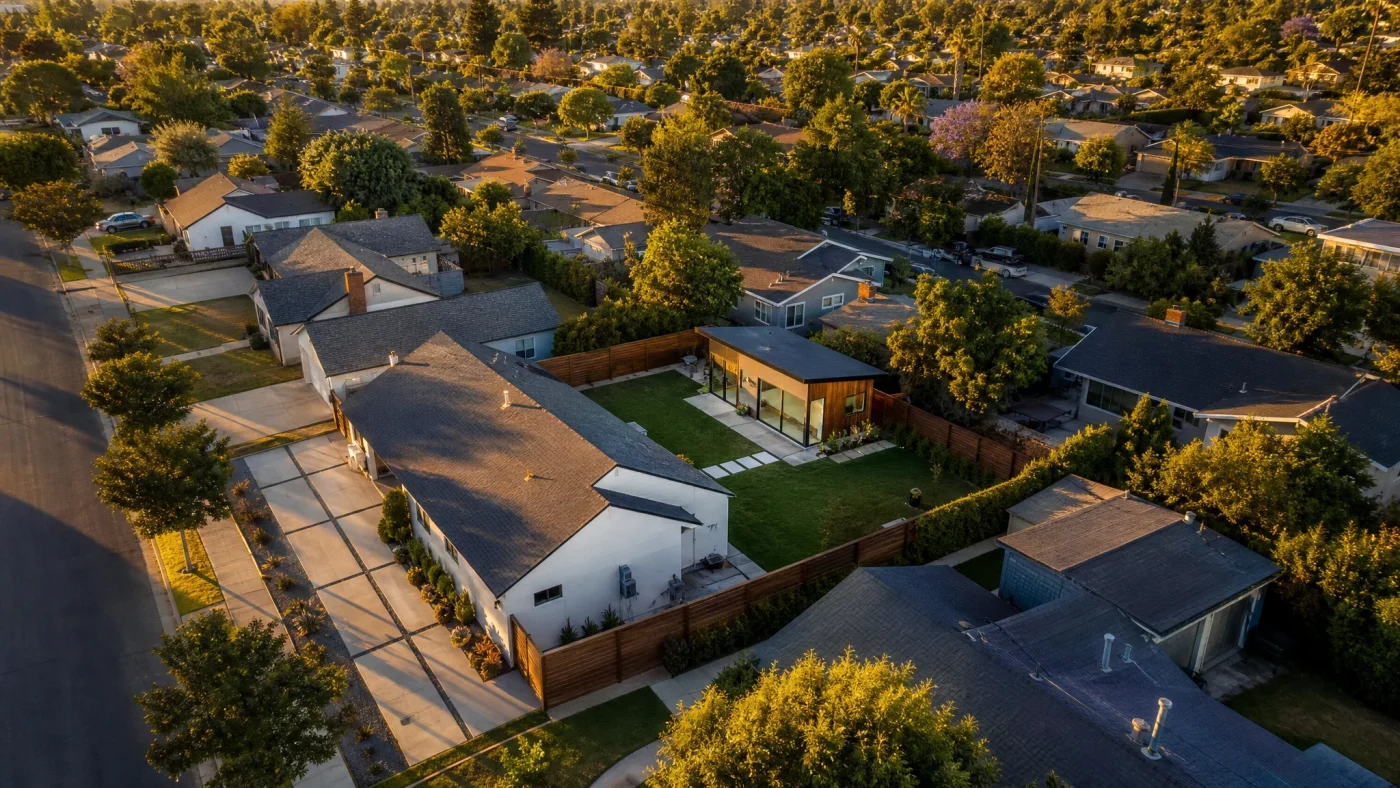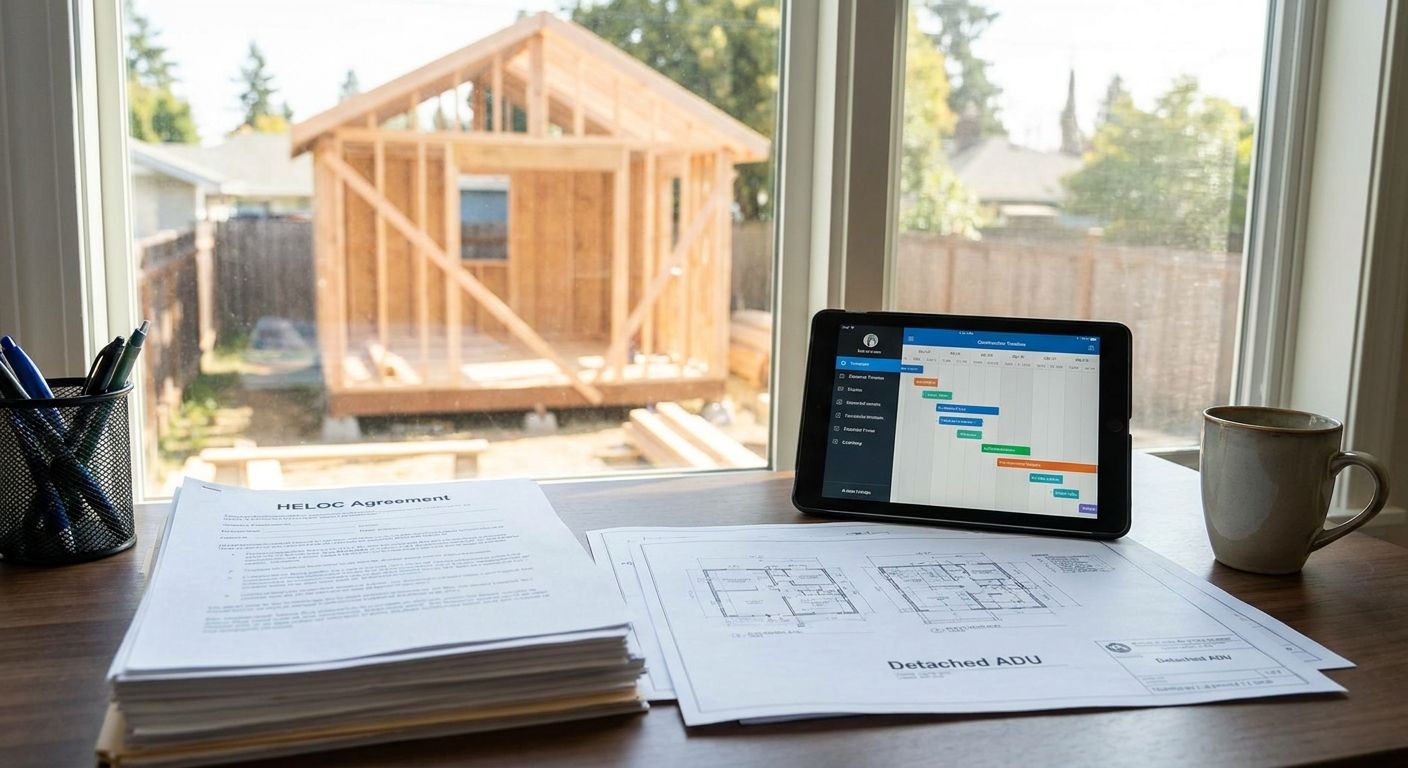
A HELOC lets you borrow against the equity you've already built in your primary home and use that cash to design, permit, and build an accessory dwelling unit — without touching your first mortgage or refinancing into a new rate. This guide breaks down how the draw period, repayment terms, and construction disbursements actually work when the loan proceeds are funding an ADU instead of a kitchen remodel.
- A HELOC for ADU construction taps home equity through a revolving credit line, usually capped near 80% combined loan-to-value in 2026.
- Most HELOCs give you a 10-year draw period and a 20-year repayment period once the ADU is finished.
- Lenders release funds in stages tied to construction milestones, not as one lump sum upfront.
- Get a feasibility check before you apply — a HELOC on a lot that can't legally hold an ADU is money spent for nothing.
Why this matters
ADU construction costs run into six figures for most detached units, and few homeowners have that sitting in a checking account. A HELOC is one of the few financing tools that lets you borrow against equity without disturbing a low first-mortgage rate, and it disburses in stages, which matches how construction actually gets paid for. Get the sequencing wrong — apply before you know the lot is buildable, or draw funds faster than the contractor bills — and you end up carrying interest on money sitting idle or scrambling for a change order you can't fund.
What you'll need
- A primary mortgage in good standing with at least 20% equity remaining after the HELOC is layered on
- A lender that explicitly allows draws for ground-up construction or ADU permits, not just renovation
- A feasibility check confirming your lot allows an ADU under local zoning before you apply
- Permit-ready construction drawings, since most lenders want a scope of work and a cost estimate before approving a construction-use HELOC
- A licensed contractor bid or fixed-fee design and build agreement
- Two to four weeks of lead time for underwriting and appraisal before the first draw
The steps
1. Confirm the lot can legally hold an ADU
Do this before you fill out a single HELOC application. Zoning setbacks, lot coverage limits, and septic or utility constraints can disqualify a property outright, and no lender wants to underwrite a loan against a build that can't get permitted. A free AI feasibility check from Build With A Plan tells you in minutes whether your address is viable — a NOT-VIABLE result means the origination pitch stops there, and you haven't spent a dollar finding that out. Skipping this step is how homeowners sink money into a design nobody can permit.
2. Calculate your available equity
Most lenders cap combined loan-to-value at 80% in 2026, meaning your first mortgage balance plus the new HELOC can't exceed 80% of your home's appraised value. Pull your current mortgage statement and a rough comparable-sales estimate of your home's value, then subtract. If the math leaves you under six figures of available credit, talk to a lender before you invest time in ADU design, since the drawings need to match what you can actually fund.
3. Get permit-ready drawings and a real cost estimate
HELOC underwriters reviewing a construction-use application want a defined scope, not a vague "build a backyard unit" description. Permit-ready plans and a contractor bid give the lender a number to underwrite against and give you a draw schedule to negotiate. This is also the point where garage conversions diverge from detached builds — a garage conversion into an ADU for rental income typically costs less and moves faster through permitting than ground-up construction, which changes how much HELOC capacity you actually need.
4. Apply and clear underwriting
Submit income documentation, the appraisal order, and your construction scope together. Underwriters for construction-use HELOCs move slower than standard home-equity applications because they're reviewing a project, not just a property value — budget three to five weeks, not the one-week turnaround you'd expect for a plain-vanilla HELOC. Expect the appraiser to value the home as-is, not at the projected post-ADU value, unless your lender explicitly offers an as-completed appraisal.
5. Draw funds against construction milestones
Once approved, you don't get the full line in one deposit. Lenders release draws as the contractor hits milestones — foundation poured, framing complete, rough-in inspections passed, final inspection signed off. Match your draw requests to your contractor's invoicing schedule so you're not paying interest on undisbursed funds sitting in your account for weeks.
6. Pay interest-only during the draw period
Most HELOCs only require interest payments on the amount drawn during the 10-year draw window, which keeps monthly payments low while the ADU is under construction and not yet producing rental income. The common mistake here is treating the low interest-only payment as the permanent number — budget for the full repayment-period payment before you sign, so the jump doesn't surprise you.
7. Transition into repayment or refinance
When the draw period ends, the HELOC typically converts to a 20-year amortizing repayment period, and payments rise because you're now paying principal plus interest. Once the ADU is built, permitted, and generating rent, many homeowners refinance the HELOC balance into a fixed-rate loan or cash-out refi that factors in the new rental income — lenders increasingly count documented ADU rent as qualifying income once a certificate of occupancy is issued.
Troubleshooting
- Appraisal comes in below what you need: Ask whether your lender offers an as-completed or subject-to appraisal that credits the finished ADU's value, not just current condition.
- Draw requests get delayed: Line up inspection scheduling with your contractor in advance — a missed inspection date pushes the entire draw and stalls the build.
- HELOC rate rises mid-draw: Most HELOCs carry a variable rate tied to prime; ask upfront whether a rate-lock or fixed-rate conversion option exists on a portion of the balance.
- Permit delays eat into the draw period: A rejected first submission can cost months. Permit-ready drawings with a high first-submission approval rate reduce this risk before it starts.
- Contractor invoices don't match lender milestones: Get your draw schedule and your contractor's payment schedule aligned in writing before construction starts, not after the first invoice is due.
- Equity runs short mid-project: This usually traces back to skipping the feasibility and cost-estimate steps — confirm your CLTV math against the full build cost, not a rough guess, before you break ground.
Tools and resources
- Free AI feasibility check to confirm zoning viability before applying for financing
- Permit-ready design and construction drawings your lender can underwrite against
- A garage conversion cost comparison if a detached HELOC-funded build isn't the right fit for your lot
- A vetted builder match so your draw schedule lines up with a contractor who's done ADU work before, not a first-timer learning the permit process on your project
Check if your lot qualifies
Free AI feasibility check before you apply for HELOC financing.
What to do next
Once you know your lot is viable and your equity math checks out, move to permit-ready drawings before you finalize the HELOC amount — the design determines the real construction cost, and the construction cost determines how much line you actually need to request in 2026.
FAQ
What's the best financing option for ADU construction?
A HELOC works well when you have strong home equity and want a revolving line for staged construction draws. Cash-out refinances and dedicated ADU construction loans are the main alternatives, and the right pick depends on your current mortgage rate and how much equity you have available.
Is a HELOC better than a construction loan for an ADU?
A HELOC is usually simpler to qualify for and cheaper to close since you're borrowing against existing equity rather than originating a new construction loan. Dedicated construction loans sometimes offer as-completed appraisals that credit the ADU's finished value, which a standard HELOC often doesn't.
How much HELOC can I get for an ADU in 2026?
Most lenders cap combined loan-to-value near 80% in 2026, so your available HELOC amount equals 80% of your home's value minus your current mortgage balance. The exact figure varies by lender and your credit profile.
Do I need permits before applying for a HELOC?
You typically need permit-ready construction drawings and a cost estimate before a lender will approve a construction-use HELOC, though full permit approval isn't always required at application. Confirm your lender's specific documentation requirements before you order drawings.
Can I use a HELOC to convert a garage into an ADU?
Yes, and garage conversions typically cost less than detached ADU construction, which means you may need a smaller HELOC line. Check zoning rules first since garage conversion permit requirements differ from ground-up ADU builds.
What happens to my HELOC payment after the draw period ends?
Payments rise when the HELOC converts from interest-only to full principal-and-interest amortization, typically after a 10-year draw period, moving into a roughly 20-year repayment term. Budget for the higher payment before you sign, not after the draw period ends.
Does rental income from the ADU count toward loan qualification?
Once the ADU has a certificate of occupancy and documented rent, many lenders will count that income toward refinancing or future qualification. During the HELOC draw and construction phase, the ADU isn't generating income yet, so it typically isn't counted at that stage.
What's the biggest risk with a HELOC-funded ADU build?
The biggest risk is starting the loan application before confirming the lot is legally buildable — zoning or setback issues can kill a project after money has already been spent on design or draws. A feasibility check before applying removes that risk entirely.
One last thing
The detail most homeowners miss: your HELOC draw period and your permit timeline run on completely different clocks, and a rejected first plan submission can burn months of interest-only payments before construction even starts — which is exactly why a high first-submission approval rate on your drawings matters as much as the interest rate on the loan itself.