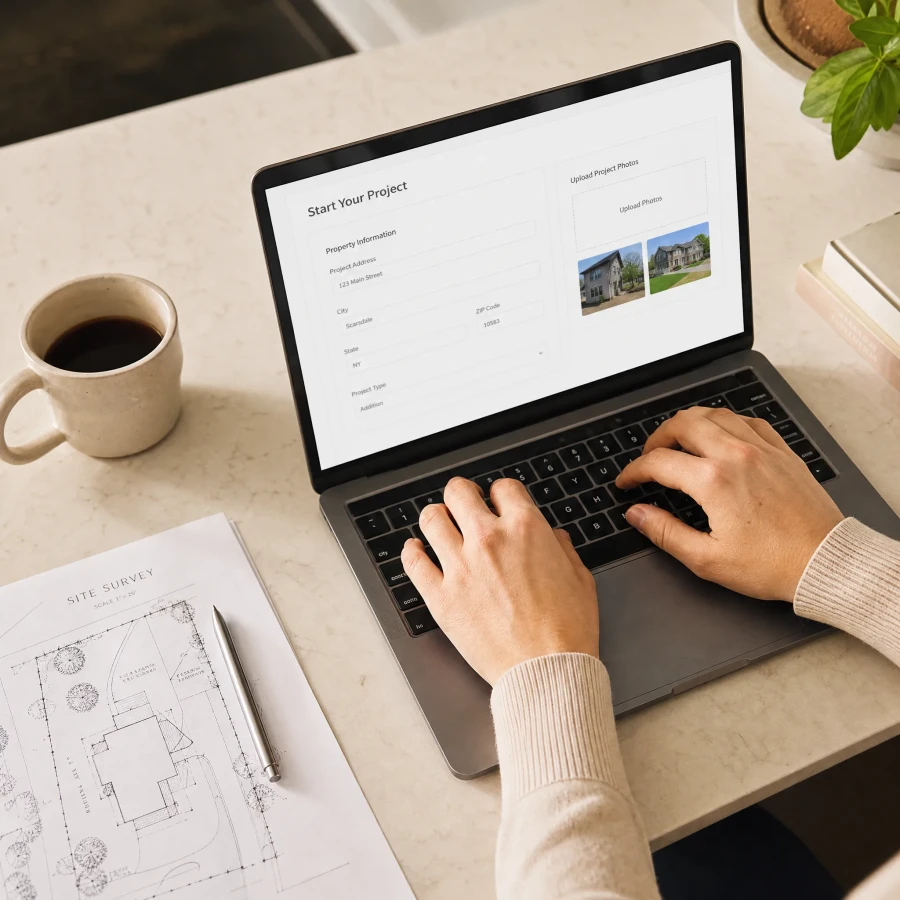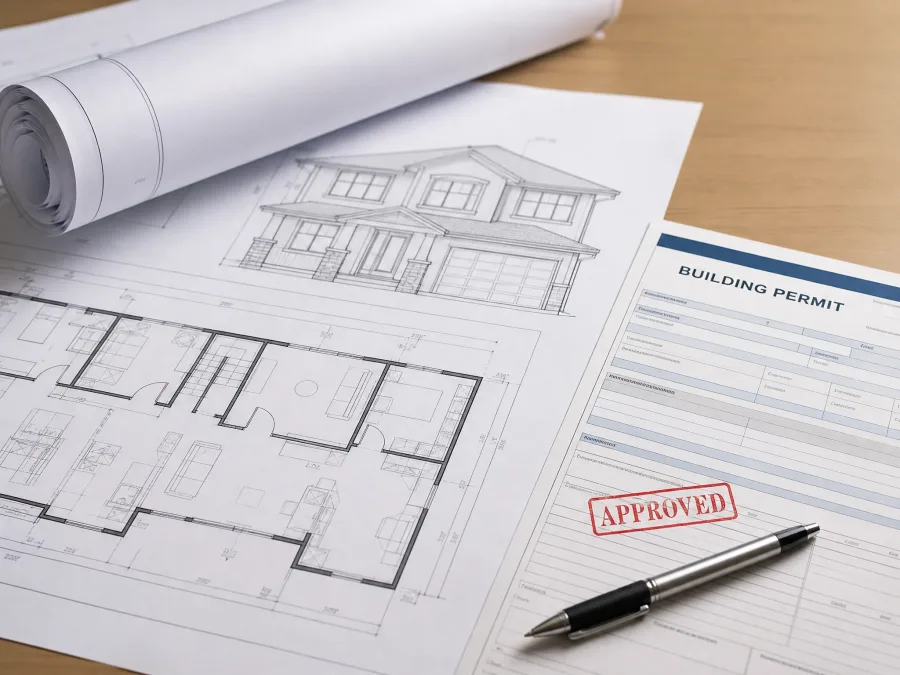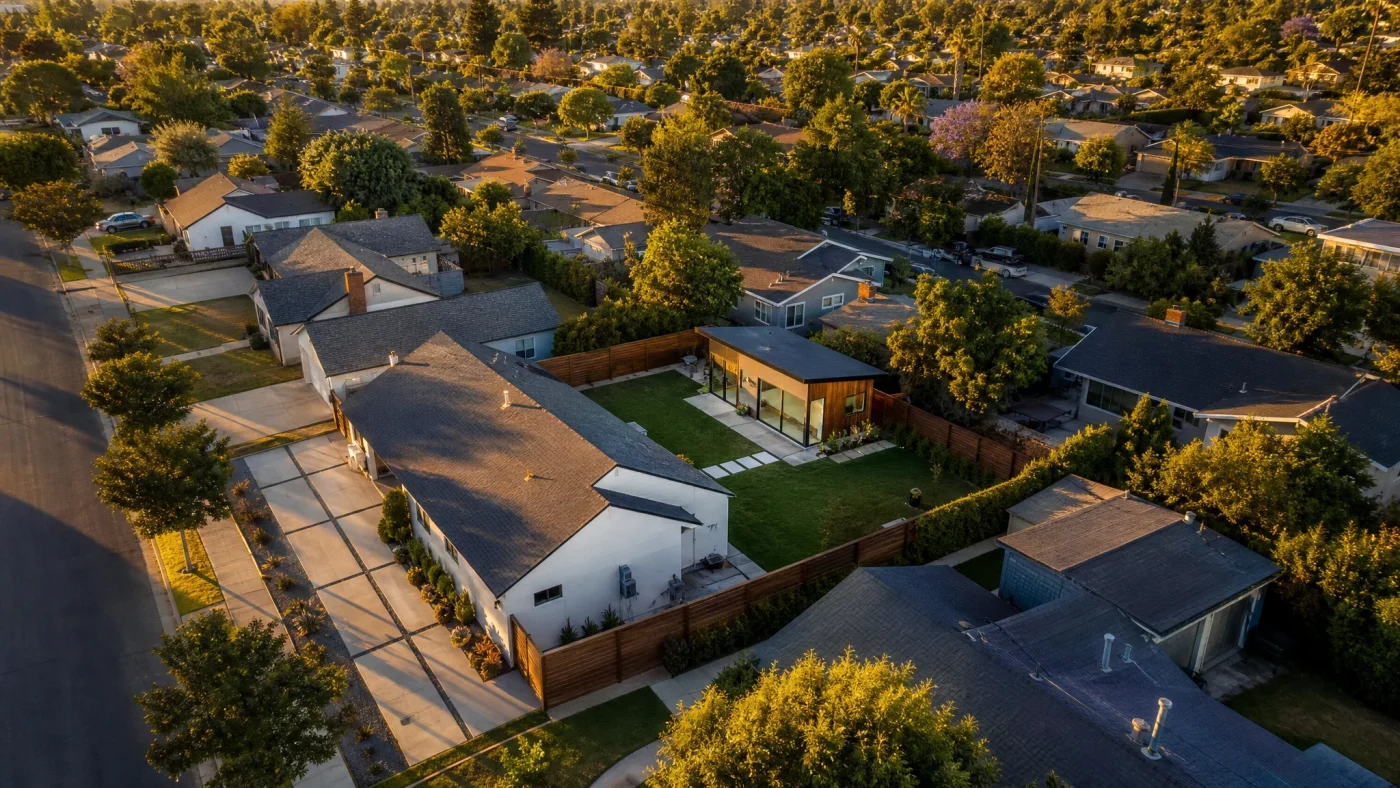
The Backyard Wealth Package covers feasibility, permit-ready design, permit management, financing connection, and builder matching for one flat fee of $6,000, regardless of construction method. We guarantee your drawings will be accepted for submission, or we revise them free. If your property doesn't qualify, you pay nothing.
Frequently Asked Questions
What is the difference between modular and manufactured ADUs?
Modular ADUs are built to the same state or local building code as a site-built home and become real property once set on a permanent foundation. Manufactured ADUs are built to a single federal standard, the HUD Code, and are often treated as personal property by lenders unless specifically titled as real property. That single difference drives most of the gap in financing options between the two.
What is a panelized ADU?
A panelized ADU uses wall panels, roof trusses, and sometimes floor systems built in a factory, then assembled on-site on a conventional foundation. It falls between modular and stick-built on both cost and timeline, since interior finishes and MEP work still happen on-site.
Is modular cheaper than stick-built for an ADU?
Usually, yes. Modular construction typically costs 15% to 25% less than an identical stick-built footprint, mainly because factory labor is more efficient and produces less material waste than on-site construction. The gap narrows once site work, foundation, and utility connections are added to both.
Can a manufactured home count as an ADU?
In many states, yes, including California, where the ADU statute explicitly includes manufactured homes, and Oregon, which allows them on a code-compliant permanent foundation. Not every city applies the same zoning treatment to manufactured units as it does to stick-built or modular ones, so confirm with your specific jurisdiction before committing.
Are modular ADUs harder to finance than manufactured ADUs?
The opposite, generally. A modular ADU on a permanent foundation is classified as real property and qualifies for conventional, FHA, or VA financing the same as a stick-built home. A manufactured ADU is more often classified as personal property, which can limit you to a chattel loan or FHA Title I loan with higher rates and shorter terms.
How long does a modular ADU take to build compared to stick-built?
A modular ADU typically takes 4 to 6 months in the factory, much of it running in parallel with on-site foundation work, followed by a set time of days to a few weeks once delivered. Stick-built construction runs 8 to 10 months because every stage happens in sequence on-site.
Do modular and manufactured ADUs need a building permit?
Yes, both do, along with panelized and stick-built. The construction method changes which code governs the unit itself (state/local code for modular and panelized, federal HUD Code for manufactured), but every method still requires local permits for the foundation, siting, and utility connections, and every method needs a final inspection before occupancy.
Which construction method is best for an ADU?
There isn't a single best method. Stick-built suits tight or irregular lots and fully custom designs. Modular suits homeowners prioritizing speed and a fixed factory price with crane access available. Panelized splits the difference. Manufactured minimizes structure cost but requires confirming financing and local zoning treatment before committing.