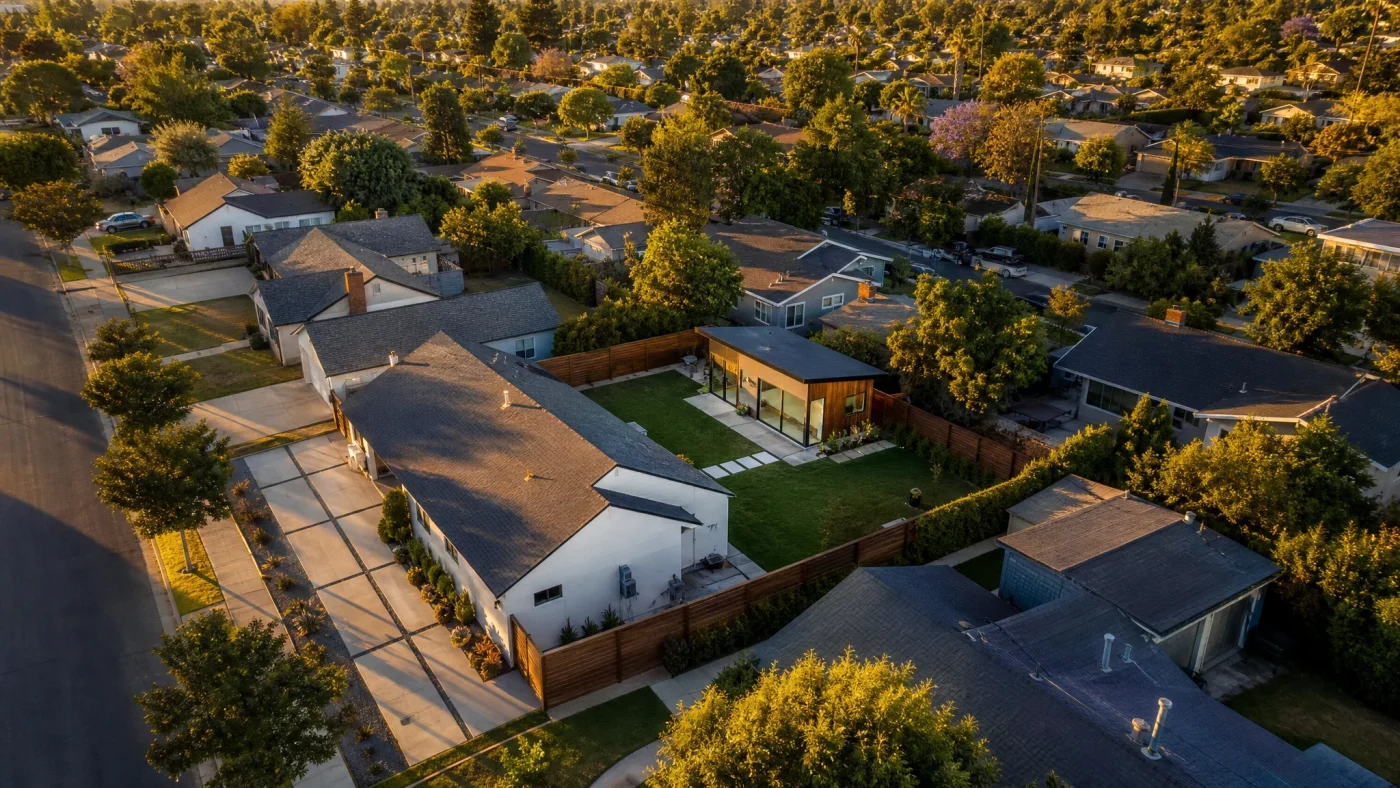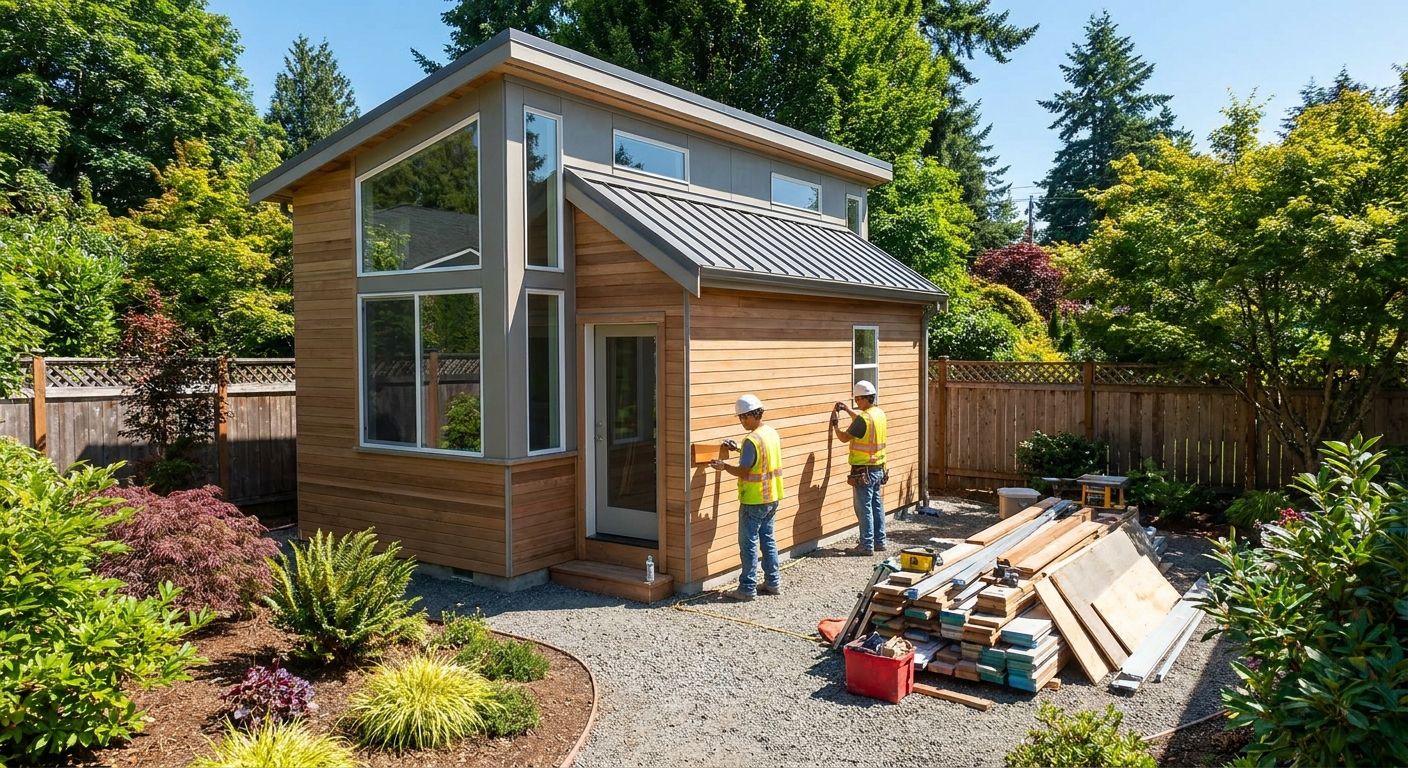
Finding ADU builders for detached backyard units in 2026 means picking between four very different paths — and the wrong pick either stalls in permitting or costs more than the unit is worth. This guide breaks down what separates a builder who gets your permit approved on the first submission from one who leaves you re-drawing plans six months in.
- Specialty ADU-only builders post the fewest permit rejections among adu builders for detached units in 2026 — Buy.
- General contractors can build detached ADUs but require homeowner-led vetting on code experience — Consider.
- Build With A Plan matches vetted builders only after a lot clears feasibility, running a 98% first-submission approval rate in 2026 — Buy.
- Modular and prefab builders install fast on flat, accessible lots but Skip on sites with grade or utility constraints.
Why This Matters
A detached ADU is a separate structure on your lot, which means it triggers its own foundation, utility hookups, setbacks, and egress review — a heavier permit lift than a garage or basement conversion. Pick a builder without ADU-specific permit experience and the plan set bounces back from the city, sometimes twice, before it clears.
Every resubmission adds weeks. In California, Texas, and Arizona — three of the highest-volume ADU markets in 2026 — plan check backlogs already stretch review timelines, so a rejected submission is not a minor delay. It is the difference between breaking ground this year and breaking ground next year.
Who This Is For
This guide is for homeowners in California, Texas, or Arizona who already have a backyard that can physically hold a detached unit and now need to decide who builds it — not whether to build. If you have not confirmed your lot is buildable under local zoning and setback rules, start with a feasibility check through Build With A Plan before you talk to a single contractor. A NOT-VIABLE lot means no pitch, no fee, and no wasted builder conversations.
What to Look for in ADU Builders for Detached Units
ADU-Specific Permit Experience
General remodel experience does not transfer to detached ADU permitting. Ask any builder how many detached ADU permits they have pulled in your specific city in the last 12 months — not statewide, not ADUs in general, your jurisdiction.
Licensing and Bonding in Your State
California, Texas, and Arizona each license general contractors differently, and none of them have a separate "ADU builder" license category. That means the licensing floor is low, and vetting bond and insurance status falls entirely on you before signing anything in 2026.
Fixed-Price vs. Cost-Plus Contracts
A fixed-price contract locks the number before groundbreaking. A cost-plus contract lets change orders pile up once the foundation is poured and you have no leverage left. For detached units, where utility trenching and site work are the biggest cost wildcards, fixed-price protects you.
Site Work and Utility Capability
Detached ADUs need their own water, sewer, and electrical tie-ins, sometimes a new panel or a sewer lateral extension. Confirm the builder handles trenching and utility coordination directly, not through a sub they have never worked with.
Financing Timeline Compatibility
Most detached ADU projects run on a HELOC, cash-out refinance, or construction loan, and each draws funds on a different schedule. A builder unfamiliar with draw-schedule financing will quote a payment structure that does not match your lender's disbursement timeline. Reviewing best ADU financing options for homeowners before you sign a builder contract avoids that mismatch entirely.
Warranty and Post-Completion Support
A one-year workmanship warranty is standard for detached new construction in 2026. Anything shorter, or verbal-only, is a signal to keep looking.
The Four Builder Paths for Detached ADUs, Ranked
1. Specialty ADU-Only Builder — the safe pick
These contractors build nothing but ADUs, which means their permit sets have already been through the local plan check process dozens of times. One spec that matters: repeat submissions to the same jurisdiction mean fewer surprise corrections on your plan review. Verdict: Buy — best track record for detached units specifically.
2. Modular or Prefab ADU Manufacturer — the fast pick
Factory-built units ship pre-framed and finished, cutting on-site labor time once the foundation and utilities are ready. The catch is site access — a crane or flatbed delivery needs a clear path, so sloped or narrow-access lots complicate the install. Verdict: Consider on flat, accessible lots; Skip on grade-heavy or tight-access sites.
3. General Contractor Without ADU Specialization — the wildcard
A licensed GC can legally build a detached ADU in any of the three states, but ADU-specific code knowledge — separate utility metering, fire separation distances, egress window sizing — varies contractor to contractor. One spec that matters: ask for their last three ADU permit numbers and call the jurisdiction to confirm approval history. Verdict: Consider, but only after independent vetting.
4. Done-for-You Origination with Vetted Builder Matching — the low-risk path
This is the Build With A Plan model: a free AI feasibility check confirms the lot can legally hold a detached unit, permit-ready design runs through a 98% first-submission approval rate in 2026, and a vetted builder gets matched only after the plan set is cleared — for a $6,000 flat fee. Build With A Plan does not swing a hammer; it removes the permit-risk guesswork before a builder ever bids the job. Verdict: Buy for anyone who wants the permit risk handled before builder selection instead of during it.
What to Avoid
- A builder who quotes before permits are drawn. A number given before the plan set exists is a guess, not a bid, and it will move once the city issues corrections.
- Bundled design-and-build contracts with vague scope language. "ADU package" with no itemized line for foundation type, utility trenching, or finish level hides cost overruns until they happen.
- Cash-discount deals with no written contract. A discount for skipping paperwork on a detached structure that needs its own permit, inspection, and certificate of occupancy is not a discount — it is a liability.
Verdict Comparison Table
| Builder Type | Best For | Permit Risk | Verdict |
|---|---|---|---|
| Specialty ADU-only builder | Standard lots, repeat local permits | Low | Buy |
| Modular/prefab manufacturer | Flat, easy-access lots | Medium | Consider |
| General contractor (non-specialized) | Homeowners willing to vet independently | High | Consider |
| Done-for-you origination + vetted matching | Homeowners who want permit risk handled first | Lowest | Buy |
If a detached unit is not the right fit for your lot, a garage conversion for rental income sidesteps new-foundation permitting entirely and moves faster in most 2026 jurisdictions.
Check if your lot qualifies
Free AI feasibility check before you talk to any builder.
FAQ
What's the best way to find ADU builders for detached units in 2026?
Confirm your lot is legally buildable before contacting any builder, then compare specialty ADU-only contractors against general contractors on local permit history. Detached units carry heavier permit review than conversions, so a builder's track record with your specific jurisdiction matters more than price alone.
Do I need a general contractor or a specialty ADU builder?
A specialty ADU-only builder carries the fewest permit rejections, but a licensed general contractor can legally build one too if you vet their local ADU permit history first. In 2026, none of California, Texas, or Arizona license a separate ADU builder category, so vetting is on you either way.
Is a modular ADU cheaper than a site-built detached unit?
Modular units cut on-site labor time by shipping pre-framed, but overall cost still depends on foundation work, utility trenching, and site access at your specific lot. Sloped or narrow-access lots often erase the modular time savings once crane and delivery logistics are added.
How long does it take to build a detached ADU in California, Texas, or Arizona?
Timeline depends primarily on plan check speed, not construction speed — a first-submission approval avoids the resubmission cycles that add weeks to months. Build With A Plan's design process runs a 10-day turnaround feeding into a 98% first-submission approval rate in 2026, which removes the biggest timeline variable before a builder is even selected.
Can I finance a detached ADU without using home equity?
Yes — options beyond home equity exist for homeowners without sufficient equity or who prefer not to tap it. Reviewing how to finance an ADU without home equity before signing a builder contract avoids picking a payment structure your financing can't support.
How do I vet an ADU builder before signing a contract?
Verify licensing and bonding status in your state, request their last several ADU-specific permit numbers, and confirm those permits actually cleared with the jurisdiction. A step-by-step vetting checklist for ADU builders covers the full list of questions to ask before any contract is signed.
What happens if my lot isn't viable for a detached ADU?
A NOT-VIABLE feasibility result means no builder pitch and no fee, since building on a lot that can't legally hold a detached structure risks sinking money into a project that never gets permitted. A garage conversion or attached addition is often the fallback path on lots that fail detached-unit feasibility.
How much does a detached ADU cost to build in 2026?
Cost varies by market, square footage, and finish level, so get a site-specific estimate rather than relying on a national average. Design and permit coordination through a done-for-you service runs a flat $6,000 fee separate from the construction contract itself.
One Last Thing
The single biggest cost overrun on detached ADU projects in 2026 is not the framing or the finishes — it is utility trenching discovered after the foundation is already poured. Ask any builder to walk the utility path with you before signing, not after.