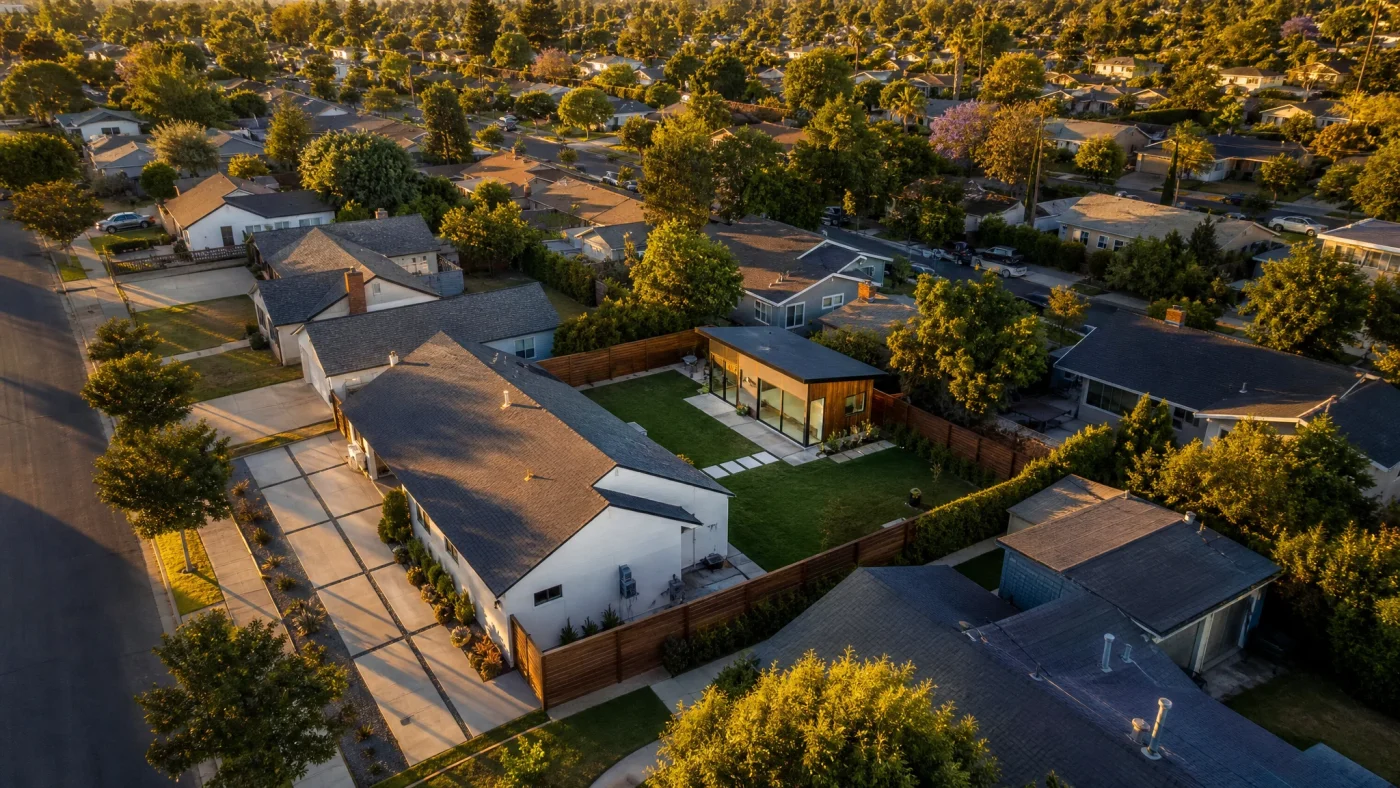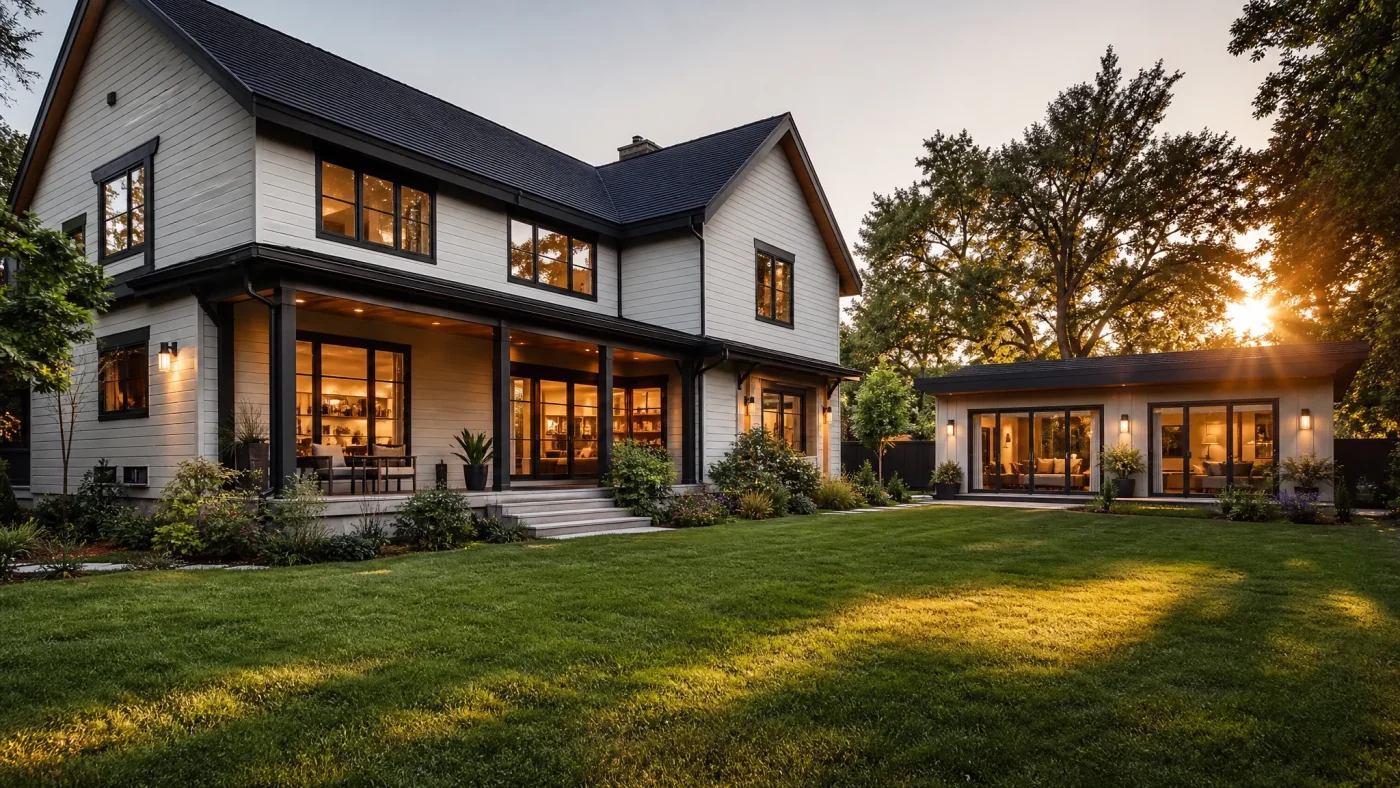
With residential rents rising across major US metropolitan markets and housing shortages squeezing suburban neighborhoods, your backyard represents one of the most lucrative wealth-generating opportunities available. Building a detached backyard ADU (often called a backyard cottage, granny flat, or carriage house) allows you to unlock passive monthly cash flow without purchasing an expensive second parcel or competing against institutional investors.
A detached backyard cottage provides complete physical autonomy. It gives tenants their own front door, kitchen, laundry, and private outdoor patio, allowing homeowners to command top-of-market residential rents while preserving complete privacy in the main home.
However, designing and building a backyard ADU that consistently attracts reliable, high-paying tenants requires deliberate planning. You must evaluate zoning setbacks, maximize usable square footage, design acoustic and visual privacy buffers, resolve utility submetering, and navigate municipal building permits.
This comprehensive guide details how to build a detached backyard ADU for maximum rental income in 2026. We examine true construction budgets, monthly rental yields across key regional markets, site layout strategies, utility billing models, and how Build With A Plan takes your project from property feasibility through final city permits.
Backyard ADU Investment Benchmarks
$2,100 to $3,200
Median monthly rent (1-2 bed)
8.2% to 11.4%
Unlevered cap rate range
4-Foot Setbacks
State statutory rear/side rules
$6,000 Flat
Build With A Plan permit package
Table of Contents
- Why a Detached Backyard ADU Is the Ultimate Rental Asset
- Rental Income Models: Long-Term vs Mid-Term vs Short-Term
- Backyard ADU Rental Yields Across Key US Markets
- Site Siting and Privacy Architecture: Coexisting With Tenants
- Utility Submetering: How to Bill Tenants for Power and Water
- How Much Does a Backyard ADU Cost to Build?
- Zoning, Height Limits, and Building Permits
- Frequently Asked Questions
Why a Detached Backyard ADU Is the Ultimate Rental Asset
Real estate investors spend tens of thousands of dollars searching for rental properties, only to pay high mortgage rates, commercial insurance premiums, and transfer taxes. Building an ADU in your existing backyard bypasses these acquisition hurdles:
- Zero Land Acquisition Cost: The single most expensive component of residential real estate is the land parcel itself. You already own the dirt, meaning 100% of your capital goes directly into vertical construction and high-grade finishes.
- Premium Rental Rates: Tenants consistently pay a 15% to 25% premium for a detached backyard cottage over an apartment complex unit. A standalone cottage offers private garden access, zero shared hallways, no noisy upstairs neighbors, and dedicated off-street parking.
- Tax and Depreciation Advantages: Because a backyard ADU is an income-generating rental property, a proportional share of its construction cost, property taxes, insurance, and maintenance expenses can be depreciated against rental income on Schedule E of your federal tax return.
- Massive Property Value Appreciation: A permitted, professionally constructed detached ADU adds legal square footage to your property record, increasing total home value by 25% to 35% in high-demand markets like Southern California, the Pacific Northwest, and Central Texas.
Rental Income Models: Long-Term vs Mid-Term vs Short-Term
When designing a backyard ADU for cash flow, you have three distinct rental models to choose from:
| Rental Strategy | Lease Duration | Target Tenant Profile | Management Effort | Relative Income Potential |
|---|---|---|---|---|
| Long-Term Residential (LTR) | 12+ months | Working professionals, university staff, retired downsizers. | Very Low (Stable monthly ACH deposit). | Baseline Market ($2,000 to $3,200/mo). |
| Mid-Term Furnished (MTR) | 30 to 90 days | Traveling nurses, corporate relocations, insurance displacement families. | Moderate (Turnovers every 2 to 3 months). | 20% to 35% above LTR ($2,500 to $4,200/mo). |
| Short-Term Vacation (STR) | 2 to 7 nights | Tourists, wedding guests, weekend visitors (Airbnb / VRBO). | High (Weekly cleaning, messaging, reviews). | 50% to 80% above LTR (Highly seasonal). |
Why the Mid-Term Rental (MTR) Strategy Wins in 2026
While short-term rentals on Airbnb offer high gross numbers, many municipalities (including Los Angeles, Austin, and Seattle) have passed strict regulations banning short-term rentals in ADUs or requiring owner-occupancy.
The Mid-Term Rental (30+ days) strategy is the sweet spot:
- Exempt from STR Bans: Leases of 30 days or longer are legally classified as standard residential tenancies, bypassing municipal short-term rental bans and hotel transient occupancy taxes (TOT).
- Exceptional Tenant Quality: Platforms like Furnished Finder connect you with traveling healthcare professionals (nurses, physicians, physical therapists) whose housing stipends are paid directly by medical staffing agencies. They are quiet, work long hospital shifts, and treat the space with respect.
- Premium Furnished Rates: A fully furnished one-bedroom backyard cottage that rents for $2,200/month on a 12-month lease can easily command $2,800 to $3,400 per month as a 60-day furnished mid-term rental.
Backyard ADU Rental Yields Across Key US Markets
Real rental income varies based on geographical location, local job markets, and unit sizing:
| Metropolitan Market | Studio ADU (400 Sq Ft) | 1-Bed ADU (600 Sq Ft) | 2-Bed ADU (800-1,000 Sq Ft) | Annual Gross Revenue |
|---|---|---|---|---|
| San Diego / Orange County, CA | $2,100 to $2,500 | $2,600 to $3,100 | $3,200 to $3,900 | $31,200 to $46,800 |
| Greater Los Angeles, CA | $1,950 to $2,400 | $2,400 to $2,950 | $3,000 to $3,650 | $28,800 to $43,800 |
| Seattle / Bellevue, WA | $1,900 to $2,300 | $2,350 to $2,850 | $2,900 to $3,500 | $28,200 to $42,000 |
| Sacramento / Central Valley, CA | $1,500 to $1,800 | $1,850 to $2,250 | $2,300 to $2,750 | $22,200 to $33,000 |
| Austin, TX | $1,400 to $1,750 | $1,750 to $2,200 | $2,200 to $2,800 | $21,000 to $33,600 |
| Denver / Boulder, CO | $1,600 to $1,950 | $2,000 to $2,500 | $2,550 to $3,200 | $24,000 to $38,400 |
To examine detailed construction budgets across different sizes, read our complete guide on 500 sq ft ADU costs.
How much rental income could your backyard earn?
We evaluate your property's setbacks, sewer connections, and maximum buildable footprint, and provide a detailed rental income projection for free. You pay nothing unless your lot qualifies.
Check my backyard feasibility freeSite Siting and Privacy Architecture: Coexisting With Tenants
The biggest fear homeowners have about building a backyard rental is losing their privacy. Nobody wants a tenant staring directly through their kitchen window or walking past their master bedroom slider at midnight.
Acoustic and visual privacy are not accidental; they are engineered into the architectural site plan:
1. The Asymmetric Window Strategy
The side of the ADU that faces the primary residence should be treated as a "blind wall" or privacy facade:
- Place utility rooms, bathrooms, laundry closets, and storage along this shared elevation.
- Use high clerestory windows (sill height at 5 feet 6 inches or higher). Clerestory windows flood the ADU ceiling with natural light and ventilation while making it physically impossible for either party to see inside.
- Orient the primary living room picture windows and sliding patio doors toward the rear property line or an enclosed side garden.
2. Dedicated Pedestrian Access Pathway
Tenants must have an independent, well-lit pedestrian route that does not cross the homeowner's private patio or lawn:
- Utilize a dedicated side-yard gate (minimum 36-inch clearance per fire code).
- Install low-voltage landscape path lighting and a modern decomposed granite or permeable paver walkway.
- Plant dense, evergreen screening hedges (such as Podocarpus, Ficus nitida, or Arborvitae) or erect a 6-foot cedar privacy fence along the walkway to separate tenant access from the main backyard.
3. Private Dedicated Outdoor Space
Tenants pay more and stay longer when they have private outdoor space. Designing a small 10x12 concrete paver patio with a cedar trellis on the back or opposite side of the cottage gives the tenant a private retreat to drink coffee or eat dinner without feeling like an intruder in your yard.
Utility Submetering: How to Bill Tenants for Power and Water
One of the most complex decisions in detached backyard ADU construction is handling utility connections:
Option 1: Full Municipal Utility Separation (Cost-Prohibitive)
Requesting a separate municipal electric meter and water meter from your local utility company:
- The Drawback: City utility districts charge astronomical capacity, capital facility, and connection fees. Adding a separate water meter and electrical service drop standardly costs $12,000 to $25,000 in upfront municipal fees before laying a foot of pipe.
Option 2: Private Submetering (The Recommended Strategy)
You run underground feeder lines from the main house service panels to the ADU, but install private, digital submeters:
- Electrical Submetering: An electrical contractor installs an approved digital submeter (such as an E-Mon D-Mon or Leviton submeter) inside the ADU subpanel. The meter tracks exact kilowatt-hours consumed. The homeowner reads the digital display monthly and bills the tenant directly on their rental portal.
- Water Submetering: A municipal-grade water submeter is installed on the dedicated 1-inch PEX supply line feeding the ADU.
- Cost: Installing private electrical and water submeters costs between $1,200 and $2,200 total, saving over $15,000 compared to municipal utility separation.
Option 3: All-Inclusive Utility Flat Fees
Many landlords bundle utilities into the base rent (e.g. $2,400 rent + $150 flat utility fee covering water, sewer, trash, power, and high-speed Wi-Fi). This eliminates monthly meter-reading admin and is highly attractive to single professional tenants.
How Much Does a Backyard ADU Cost to Build?
Building a ground-up detached backyard cottage requires full residential site development: excavation, concrete foundations, framing, plumbing, electrical, and interior finishes:
| Footprint & Size | Layout Configuration | Turnkey Construction Cost | Estimated Monthly Rent | Annual Cash Flow (Gross) |
|---|---|---|---|---|
| Studio (380 - 450 Sq Ft) | Open concept, full bath, galley kitchen. | $165,000 to $210,000 | $1,650 to $2,200 | $19,800 to $26,400 |
| 1-Bedroom (550 - 650 Sq Ft) | Private bedroom, full bath, L-shaped kitchen, living room. | $210,000 to $265,000 | $2,200 to $2,850 | $26,400 to $34,200 |
| 2-Bedroom (750 - 900 Sq Ft) | Two bedrooms, 1 or 2 baths, open living/dining, laundry. | $255,000 to $325,000 | $2,750 to $3,600 | $33,000 to $43,200 |
| Large 2-3 Bed (1,000 - 1,200 Sq Ft) | Full single-family cottage, 2 full baths, walk-in closets. | $310,000 to $410,000 | $3,400 to $4,400 | $40,800 to $52,800 |
To examine regional construction cost benchmarks in detail, review our guide on detached ADU costs.
Zoning, Height Limits, and Building Permits
State legislative reforms have permanently established your legal right to build a detached backyard cottage:
1. Statutory 4-Foot Setbacks
Under state ADU laws in California (Gov Code 65852.2), Washington (HB 1337), and Oregon, cities cannot mandate side and rear setbacks greater than 4 feet for detached ADUs up to 800 square feet (and up to 1,200 sq ft in many jurisdictions). This allows homeowners to tuck the cottage neatly into a rear corner of the property, preserving central lawn space.
2. Building Height Allowances
- Single-Story Units: Standard state allowances permit detached ADUs to reach at least 16 to 18 feet in height, allowing vaulted ceilings and clerestory window configurations.
- Two-Story Units: In California, state law permits up to 18 feet height (plus 2 additional feet for roof pitch matching the main home), and up to 24 to 25 feet if the property is located within one-half mile of a major transit stop or on a multi-family parcel.
3. Separation Between Structures
Local building and fire codes standardly require a minimum horizontal separation of 6 feet to 10 feet between the exterior wall of the primary home and the exterior wall of the detached ADU. If structures are placed closer than 10 feet, building codes mandate one-hour fire-rated exterior wall assemblies and fire-rated eave overhangs.
Build With A Plan delivers the entire permit-ready architectural and engineering package for a flat fee of $6,000, with municipal plan check revisions included. Learn more on our pricing page.
Frequently Asked Questions
How much does it cost to build a detached backyard ADU?
In most US metro markets, a turnkey detached backyard ADU costs between $185,000 and $285,000 for a standard 500 to 750 square foot one-bedroom unit ($320 to $450 per square foot). Total costs depend on site grading, utility trenching distances to the main street sewer, electrical service panel upgrades, and interior finish selections.
How much can I rent my backyard ADU for?
In major metropolitan regions (California, Washington, Oregon, Colorado, Texas), a 1-bedroom backyard ADU commands between $2,100 and $3,100 per month on a 12-month lease. Configured as a fully furnished mid-term rental (30-90 days for traveling healthcare professionals), monthly revenues often reach $2,800 to $3,800 per month.
Do I have to pay city development impact fees on a backyard ADU?
In California, state law explicitly exempts all ADUs under 750 square feet from municipal development impact fees (parks, traffic, water capacity, and capital improvement fees). If your unit is 750 square feet or larger, the city can charge impact fees proportional to the size of the primary house, typically adding $4,000 to $16,000 to project costs.
What is the minimum lot size required to build a backyard ADU?
Under current state statutes in California, Washington, and Oregon, local municipalities cannot impose minimum lot size requirements for ADUs. As long as your parcel can physically accommodate the proposed unit footprint while meeting 4-foot rear and side setbacks and building separation rules, your lot qualifies regardless of acreage.
How long does it take to build a detached backyard cottage?
A typical detached backyard ADU takes 9 to 14 months from initial feasibility to final Certificate of Occupancy. This timeline includes architectural CAD drafting and engineering (4 to 6 weeks), city permit review (2 to 4 months), and on-site construction (5 to 8 months).
Related Planning & Design Resources
- 500 Sq Ft ADU Cost: Itemized Budget Guide
- ADU Building Permit: Step-by-Step Guide & Costs
- Garage Conversion: The Complete Guide to Converting Your Garage (2026)
- Prefab ADU Guide: Modular Accessory Dwelling Units Explained
- Check Your Backyard Feasibility Free
- Build With A Plan Design & Permitting Pricing