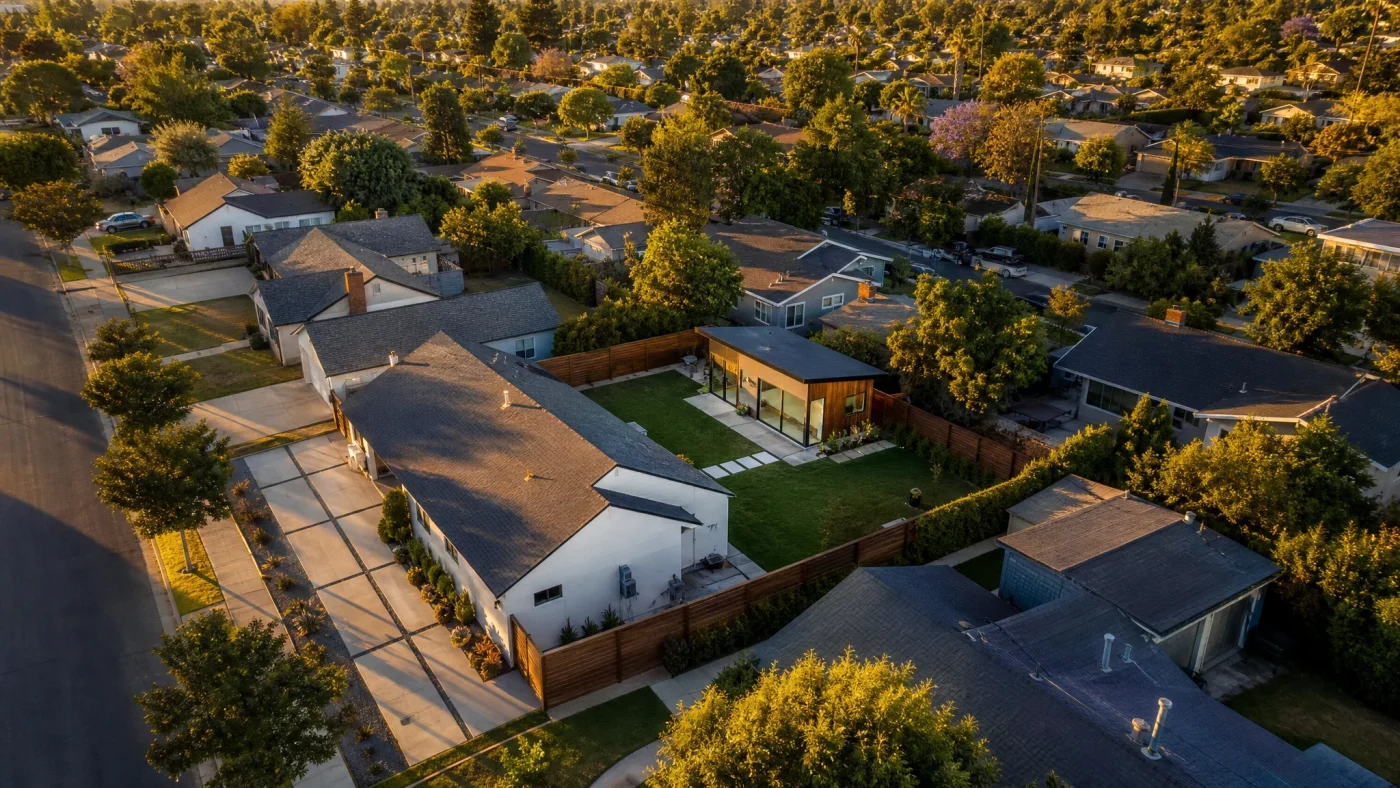
A cash-out refinance for an ADU replaces your existing mortgage with a bigger one and hands you the difference in cash, which you then spend on design, permits, and construction. Here's the exact sequence to pull it off in 2026 without stalling your build or overpaying for money you didn't need to borrow.
- Cash-out refinance for an ADU replaces your whole mortgage and pays out equity as a lump sum, capped near 80% loan-to-value on conventional loans.
- VA cash-out refinances go up to 90-100% LTV for eligible veterans, which changes the math for ADU budgets significantly.
- Build With A Plan's $6,000 flat design and permit fee fits inside most cash-out draws without eating the construction budget.
- Compare a cash-out refinance against the best ADU financing options for homeowners before you lock a new rate on the whole mortgage.
- Verdict: cash-out refinance for an ADU works when you have 20%+ equity and your current rate isn't already below market.
Why this matters
An ADU costs real money before a single wall goes up: design, permit fees, engineering, and utility connections all come out of pocket before a builder touches the lot. A cash-out refinance is one way to fund that without a second loan on the property. It's also the wrong tool if your current mortgage rate is already low, because refinancing resets the rate on your entire loan balance, not just the amount you're pulling out.
Compare that against the best ADU financing options for homeowners before committing, because a cash-out refinance is a permanent decision on your whole mortgage, not a small side loan you can pay off in two years.
What you'll need
- Current mortgage statement showing your remaining balance and rate
- A recent home valuation or comparable sales in your area from the last 90 days
- Two years of tax returns if you're self-employed, or pay stubs and W-2s if you're not
- A feasibility check on the ADU itself — zoning, lot size, and setbacks decide whether the project is even legal before you touch financing
- Three lender quotes minimum to compare rate, fees, and closing costs
- A rough construction budget from design through builder handoff, not just a guess
The steps
1. Pull your current equity position
Subtract your remaining mortgage balance from your home's current market value. That gap is your equity, and it's the number every lender uses to calculate how much cash you can pull out. A house worth $750,000 with a $400,000 balance carries $350,000 in equity, but conventional lenders will only let you refinance up to 80% of the home's value — so the math caps your cash-out amount well before you hit that full $350,000.
Common mistake: homeowners assume they can access 100% of their equity. Conventional caps sit at 80% LTV, FHA allows up to 80% as well, and only VA cash-out refinances for eligible veterans reach 90-100% LTV.
2. Confirm the ADU is actually buildable before you borrow
A cash-out refinance funds a project that has to clear zoning, setback, and lot-coverage rules first. Pulling equity against a lot that can't legally hold an ADU means you're carrying a bigger mortgage with nothing to show for it. A feasibility check tells you whether the project is viable before any money moves, and a NOT-VIABLE result means the project doesn't get pitched — full stop.
Expected outcome: a written viable/not-viable determination tied to your specific lot, not a generic zoning summary.
3. Compare cash-out refinance against a HELOC and other options
A cash-out refinance touches your entire mortgage balance. A HELOC sits on top of your existing loan and leaves your original rate untouched. If your current mortgage rate is well below today's market rate, refinancing the whole balance to access a fraction of it in cash usually costs more over the life of the loan than a second-lien option. Read how a HELOC works for ADU construction and run both scenarios with a lender before signing anything.
Common mistake: locking a cash-out refinance without running the HELOC numbers side by side. The comparison takes an afternoon; the wrong choice costs years of extra interest.
4. Get quotes from at least three lenders
Rates, origination fees, and closing costs vary enough between lenders that skipping this step routinely costs homeowners thousands over the loan term. Ask each lender for the same three numbers: rate, APR, and total closing costs. Put them side by side before you pick.
Expected outcome: a comparison sheet with apples-to-apples numbers, not three quotes you have to mentally normalize yourself.
5. Lock the refinance before design work starts
Locking the rate before you commission design work protects your budget from rate movement mid-project. A 2026 ADU build typically runs design, permitting, and construction across several months — if your rate lock expires before funds are drawn, you're re-shopping the loan mid-build.
Common mistake: starting permit-ready design before the refinance closes, then discovering the appraisal came in lower than expected and the cash-out amount shrank.
6. Fund permit-ready design and permit management first
Design and permitting come before construction spending, and they're a fixed, known cost — a flat $6,000 covers permit-ready design and permit management with a 10-day design turnaround and a 98% first-submission approval track record. Getting this stage funded and locked removes the biggest source of scope creep: redesigns caused by a rejected first submission.
Expected outcome: stamped, permit-ready drawings and a submitted application, not a concept sketch you still have to pay someone to finish.
7. Release construction draws against a vetted builder's schedule
Once permits are approved, draws release against builder milestones — foundation, framing, rough-in, finish — rather than as one lump payment. This keeps the cash-out proceeds tied to actual progress instead of sitting in an account or, worse, running out halfway through framing.
Common mistake: paying a builder a large deposit before permits are even approved. Money should move against work completed, not promises made.
Check if your lot qualifies first
Free AI feasibility check before you touch your mortgage.
Troubleshooting
Appraisal comes back lower than expected. Your cash-out amount is tied to appraised value, not what you think the home is worth. Ask the lender for a second appraisal or wait six months if comparable sales are trending up in your area.
LTV cap doesn't leave enough cash for the full ADU budget. Scale the design down, phase construction, or pair a smaller cash-out amount with a HELOC for the remainder — see how a HELOC works for ADU construction for how that combination works in practice.
Self-employed income documentation gets flagged. Lenders scrutinize two years of tax returns more closely for self-employed borrowers, and net income after write-offs can look lower than actual cash flow. This is a documented, solvable problem, not a dead end.
You don't have enough equity to refinance at all. A cash-out refinance isn't the only path to ADU financing, and it isn't even the right one if your equity position is thin. Not every homeowner has 20% equity sitting untouched in 2026.
Zoning issues surface after the refinance closes. This is the exact scenario a feasibility check exists to prevent — confirm viability before, not after, you touch your mortgage. Refinancing against a lot that can't legally support an ADU is how homeowners sink $180,000+ into a project with no legal path to a rental unit.
Rate resets higher than your current mortgage. If market rates have moved up since your original loan, a cash-out refinance raises the rate on your entire balance, not just the cash-out portion. Run the total cost comparison against a HELOC before locking.
Tools and resources
- Current mortgage statement and a recent home valuation
- Three lender quotes with rate, APR, and closing costs side by side
- A written feasibility determination on the ADU lot itself
- Best ADU financing options for homeowners for a side-by-side of cash-out refinance against other paths
- A construction draw schedule tied to builder milestones, not lump payments
What to do next
If your equity position is thin or your current rate is already low, a cash-out refinance is the wrong move regardless of how good the ADU project looks on paper. Run the numbers against alternative paths before you touch your primary mortgage — start with a feasibility check on the lot itself, since that determines whether any financing conversation is even worth having in 2026.
FAQ
What is a cash-out refinance for an ADU?
A cash-out refinance for an ADU replaces your current mortgage with a larger one and pays you the difference in cash to fund design, permits, and construction. It resets the rate on your entire mortgage balance, not just the cash-out portion.
How much can I cash out for an ADU?
Conventional and FHA cash-out refinances cap at roughly 80% loan-to-value, while VA cash-out refinances reach 90-100% LTV for eligible veterans. The exact amount depends on your home's appraised value and remaining mortgage balance.
Is a cash-out refinance better than a HELOC for an ADU?
A cash-out refinance is better when your current mortgage rate is close to today's market rate; a HELOC is better when your existing rate is well below market since it leaves that rate untouched. Run both scenarios with a lender before deciding.
How much does ADU design and permitting cost?
Build With A Plan charges a flat $6,000 for permit-ready design and permit management, separate from the construction cost paid to a builder. That fee is a known, fixed number you can plan a cash-out draw around.
Can self-employed homeowners get a cash-out refinance for an ADU?
Yes, but lenders require two years of tax returns and scrutinize net income more closely since write-offs can lower reported income. Documentation takes longer but the path is standard, not exceptional.
Do I need equity in my home to finance an ADU?
A cash-out refinance requires meaningful equity, typically 20% or more after the new loan closes, but it isn't the only financing path available in 2026. Homeowners without equity have other options worth comparing first.
What happens if the ADU project isn't zoning-viable after I refinance?
You're left carrying a larger mortgage with no legal path to build, which is why a feasibility check on the lot should happen before any refinance closes. A NOT-VIABLE result means the project shouldn't move forward at all.
How long does it take to fund an ADU with a cash-out refinance?
Refinance closing typically takes 30-45 days, after which design and permitting can proceed with a 10-day design turnaround before construction draws begin. Total timeline depends heavily on local permit review speed.
One last thing
The number that trips up most homeowners isn't the interest rate — it's the LTV cap. A $750,000 home with $350,000 in equity sounds like plenty until the 80% conventional cap shows the real cash-out ceiling is closer to $200,000 after paying off the existing balance. Run that math before you fall in love with a design.