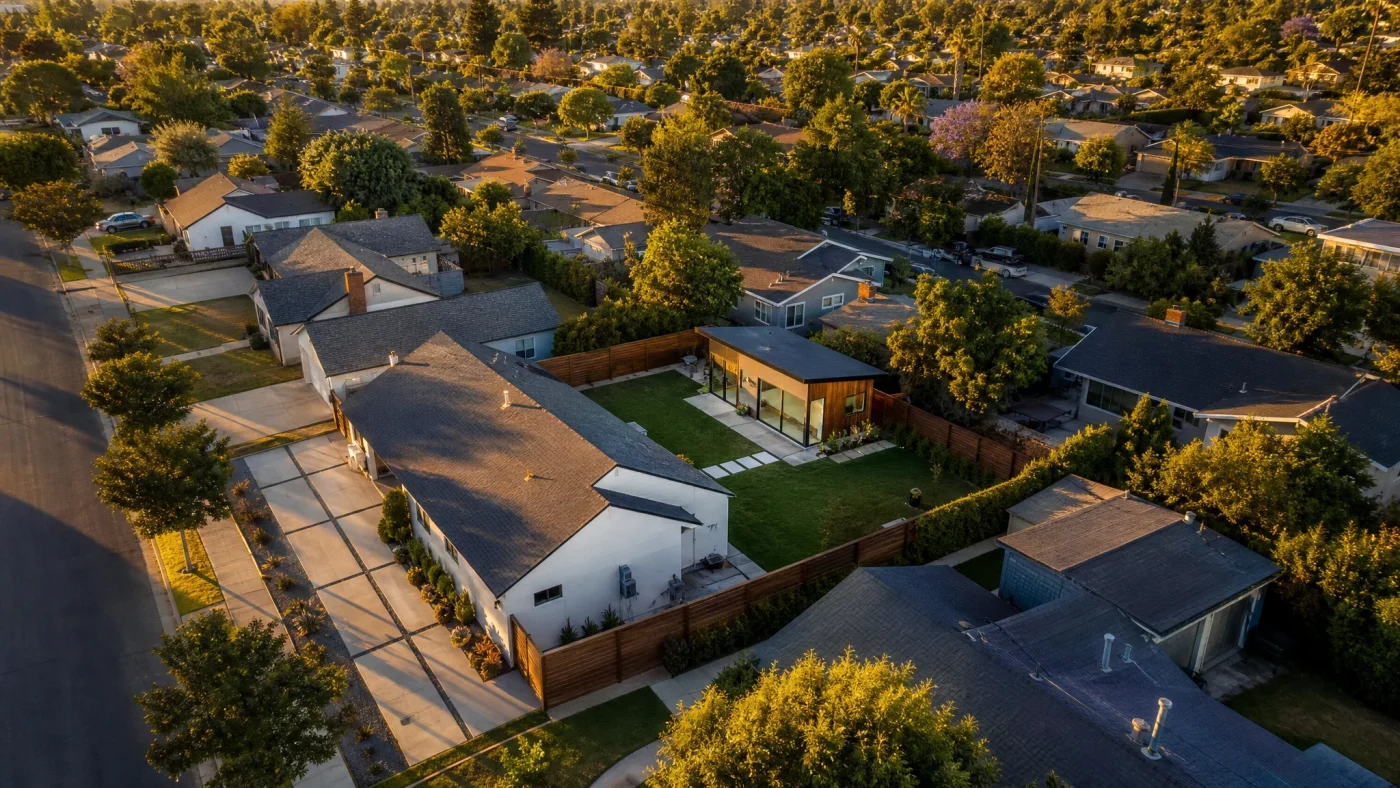
First-time landlords looking at ADU financing hit the same wall fast: banks want to see rental history you don't have yet, and most "ADU loan" marketing pages don't tell you which product actually fits your equity, income type, or timeline.
- HELOCs remain the default ADU financing for first-time landlords with 20%+ home equity in 2026 - Buy.
- No-equity construction loans exist for owners under five years in their home - Consider, expect a higher rate.
- Self-employed owners need bank-statement programs, not W-2 underwriting - Consider with 12-24 months of deposits ready.
- Retirees on fixed income have narrower but real options - Consider, verify income-counting rules first.
- Skip contractor-arranged loans with balloon payments; they're the fastest way to lose the rental math.
Why this matters
An ADU only pays for itself if the financing doesn't eat the rent it's supposed to generate. Get the loan type wrong and you're covering a $600-$900 monthly payment gap out of pocket while you wait for a tenant. Build With A Plan runs a free AI feasibility check before any homeowner talks financing, because a lot that can't legally hold an ADU makes every financing decision after it irrelevant. That check, paired with permit-ready design, is what separates a landlord who borrows against a real project from one borrowing against a guess.
First-time landlords also underwrite differently than repeat investors. Lenders can't count rental income you haven't collected yet the same way they'd count income from an existing rental property, and that changes which loan products even qualify you.
Who this is for
This guide is for homeowners who have never rented out a unit before and are financing a backyard ADU specifically to generate rental income - not a mother-in-law suite, not a home-office conversion. If you already own a rental property, your underwriting path is different and usually easier. If this is your first rental unit, the loan officer is going to ask harder questions about projected rent, and you need to know which product handles that gracefully before you apply.
What to look for in ADU financing for first-time landlords
How the lender treats projected rental income
Most first-time landlords don't have two years of Schedule E history, so the loan hinges on whether the lender will count future rent at all. Some conventional programs allow a portion of projected ADU rent - often around 75% of appraised market rent - to offset your debt-to-income ratio before the unit is even built. Ask this question before you ask about rate.
Combined loan-to-value ceiling
Home-equity products cap how much you can borrow against your house's value, typically 80% to 90% combined loan-to-value depending on the lender. If your equity is thin, this ceiling decides whether a HELOC is even on the table for you in 2026.
Draw schedule flexibility
ADU construction happens in stages - foundation, framing, mechanicals, finish work - and a loan that releases money in one lump sum forces you to front costs a phased draw schedule wouldn't. Construction-specific products draw against milestones; a straight home-equity loan hands you the full amount up front, which is riskier if a builder underperforms early.
Rate type and exposure over time
A variable-rate HELOC can move against you mid-project if you're carrying a balance for 6-12 months during permitting and build-out. Fixed-rate construction loans lock the number but usually cost more at closing. Know which one you're signing before the rate moves.
Approval speed against your permit timeline
Permit review and financing approval run on separate clocks, and if your loan closes before your plans are permit-ready, you're paying interest on money doing nothing. Line up financing approval with your design and permitting phase, not before it.
Top financing paths for first-time landlords
HELOC - the equity pick
If you've owned your home long enough to build real equity, a home equity line of credit is still the fastest, cheapest way to fund an ADU in 2026. Lenders typically cap combined loan-to-value at 80% to 90%, and draws are flexible enough to match a phased build.
The tradeoff is variable rate exposure and the fact that you're borrowing against your primary residence, not the future rental unit. How a HELOC works for ADU construction breaks down draw periods, repayment structure, and what lenders check before approval. Verdict: Buy if you have 20%+ equity and can tolerate a variable rate for the build period.
No-home-equity construction loan - the wildcard
Owned your house for under five years, or already carrying a large first mortgage? A HELOC may not have room to work. Construction and renovation loan products that don't require existing equity fill that gap, though they come with tighter credit requirements and a rate premium over a HELOC.
Financing an ADU without home equity walks through the specific products - personal, construction-only, and cross-collateral options - that don't hinge on your home's paid-down balance. Verdict: Consider if a HELOC's LTV cap shuts you out; expect more paperwork and a higher rate.
Self-employed income documentation loan - the paperwork-heavy pick
Standard mortgage underwriting wants two years of tax returns showing consistent income, which punishes self-employed homeowners whose write-offs shrink their reported income on paper. Bank-statement loan programs solve this by underwriting off 12 to 24 months of deposit history instead.
ADU financing for self-employed homeowners covers which lenders run bank-statement programs and what documentation actually moves the approval forward. Verdict: Consider if two years of tax returns understate your real cash flow.
Fixed-income and retiree-friendly options
Retirees financing an ADU for rental income face a different problem: qualifying income is fixed, but the projected rent from the new unit isn't counted the same way it would be for a working borrower. Some lenders will still count a share of projected ADU rent, and equity-based products remain open to retirees who've owned their home for decades.
ADU financing for retirees on a fixed income covers which products actually work when your income statement looks nothing like a W-2 borrower's. Verdict: Consider, and confirm the income-counting rule with the lender before you commit to a build timeline.
What to avoid
- Contractor-arranged financing with balloon payments. The monthly number looks manageable until the balloon hits mid-lease, right when your tenant income is supposed to be stabilizing the budget.
- Unsecured "ADU loans" priced well above a HELOC or construction loan rate. These get marketed directly to first-time landlords who don't have equity, and the rate premium can erase a year or more of rental income.
- A cash-out refinance that resets your entire primary mortgage rate. If your existing rate is well below where 2026 rates sit, refinancing the whole loan to pull equity for one ADU is usually the most expensive way to get there.
Financing comparison
| Financing type | Equity needed | Speed to close | Rate exposure | Best for | Verdict |
|---|---|---|---|---|---|
| HELOC | 20%+ equity, 80-90% max CLTV | Fast | Variable | Owners with built-up equity | Buy |
| No-equity construction loan | Little to none | Moderate | Fixed or variable, higher rate | Owners under 5 years in the home | Consider |
| Self-employed bank-statement loan | Varies by product | Moderate | Fixed or variable | Self-employed with strong deposit history | Consider |
| Retiree-friendly options | Often high (long-term owners) | Moderate | Varies | Fixed-income owners | Consider |
| Contractor balloon financing | None | Fast | High, deferred risk | Nobody, structurally | Skip |
Check ADU feasibility before you finance
Free AI feasibility check confirms your lot can legally hold an ADU first.
FAQ
What is the best ADU financing for first-time landlords in 2026?
A HELOC is the best ADU financing for first-time landlords with 20% or more home equity in 2026, since combined loan-to-value caps typically run 80% to 90% and draws are flexible. Owners without that equity usually need a construction loan or bank-statement product instead.
Can lenders count projected ADU rental income before the unit is built?
Some lenders count a share of projected ADU rent, often around 75% of appraised market rent, toward your qualifying income before construction finishes. This depends on the specific loan program, so confirm it directly with the lender before you plan your budget around it.
Is a HELOC better than a cash-out refinance for ADU construction?
A HELOC is usually better if your existing mortgage rate is below current 2026 market rates, since a cash-out refinance resets your entire loan to the new rate. A cash-out refinance can make sense if your current rate is already close to market.
How much home equity do you need for ADU financing?
Most HELOC and home-equity loan products cap combined loan-to-value at 80% to 90%, meaning you need enough equity to stay under that ceiling after adding the new loan. Homeowners under that threshold typically need a no-equity construction loan instead.
Can self-employed homeowners get ADU financing without two years of tax returns?
Yes, bank-statement loan programs underwrite off 12 to 24 months of deposit history instead of tax returns. This is the standard path for self-employed homeowners whose write-offs make their reported income look lower than actual cash flow.
Do retirees qualify for ADU financing on a fixed income?
Retirees can qualify, usually through home-equity products if they've owned the home for decades, or through programs that count a portion of projected ADU rent. The specific income-counting rules vary by lender, so this needs to be confirmed before committing to a build timeline.
What ADU financing mistakes do first-time landlords make?
The most common mistake is closing a loan before the ADU design is permit-ready, which means paying interest on money sitting idle during the permitting phase. The second is taking contractor-arranged financing with a balloon payment that hits before rental income stabilizes.
One last thing
The financing decision most first-time landlords skip is checking whether their lot can legally hold an ADU before they lock a rate. A HELOC approved against a lot that fails setback or zoning review in 2026 is money borrowed against a project that never breaks ground - confirm feasibility first, finance second.